
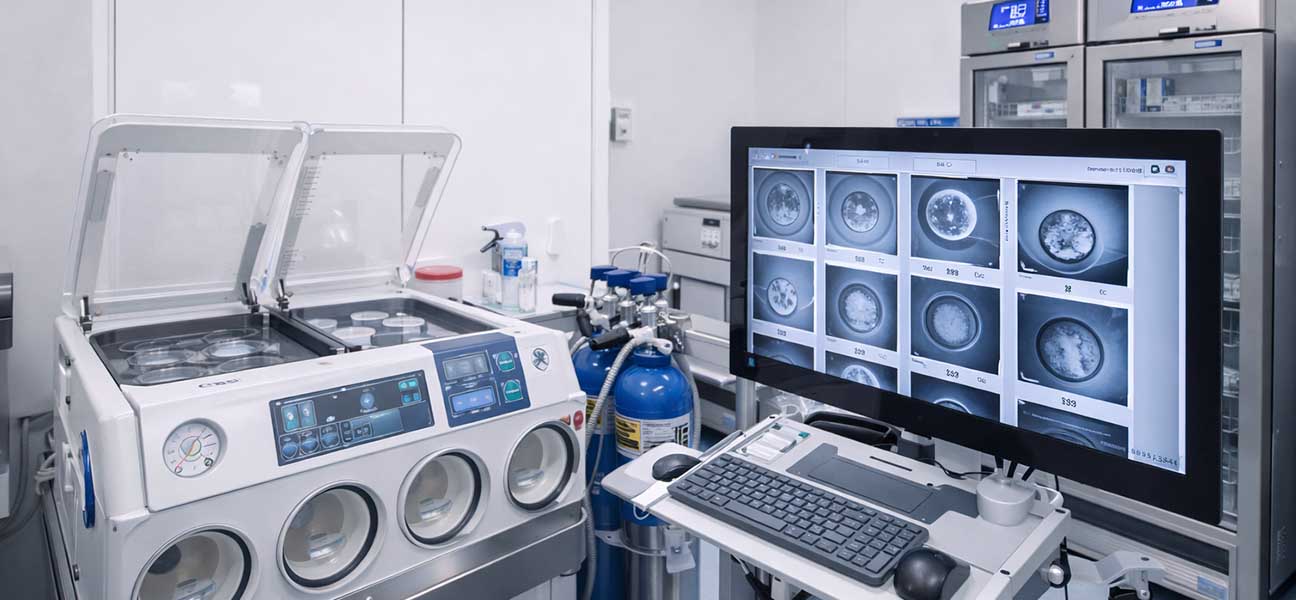
Opening: Real Consultation Scenario
Patient, 34 years old, secondary infertility, AMH 1.8 ng/mL, ultrasound suggests uneven endometrial echo.
“Doctor, I’ve had three ultrasounds, and they all say there’s no major issue with my endometrium. Why do I absolutely need a hysteroscopy? This exam costs over three thousand, and with anesthesia and pathology, it’s almost five thousand. Is this an over-examination?”
Reproductive Specialist’s Answer: “An ultrasound is like looking at the structure of a room through frosted glass. It can detect large occupying lesions, but for subtle pathologies like endometrial polyps, adhesions, and chronic endometritis, the ultrasound miss rate exceeds 40%. Hysteroscopy directly enters the uterine cavity for observation and is the gold standard for diagnosing endometrial pathology. The cost is indeed not low, but compared to the time and embryo waste caused by repeated implantation failures, spending this money on the examination phase is the most worthwhile.”
1. Overview of Hysteroscopy Costs for IVF
In China, hysteroscopy is a routine procedure for evaluating the uterine cavity environment before assisted reproduction. It is primarily used to rule out pathologies affecting embryo implantation, such as endometrial polyps, intrauterine adhesions, submucosal fibroids, and chronic endometritis. The cost is not fixed but is composed of several sub-items.
| Cost Item | Price Range (RMB) | Description |
|---|---|---|
| Hysteroscopy Examination Fee (Procedure Fee) | 800 – 2000 | Includes equipment use, physician operation, positioning, and disinfection |
| Material Fee (Scope, Distension Medium, etc.) | 400 – 1200 | Disposable or reusable consumables, varies significantly by brand |
| Anesthesia Fee (IV General / Local) | 500 – 1800 | IV general anesthesia costs more; some hospitals offer local anesthesia |
| Pathological Biopsy Fee (if endometrial tissue is taken) | 300 – 1200 | Added when suspicious lesions are present, includes paraffin sectioning + diagnosis |
| Pre-operative Examination and Medication Fees | 200 – 600 | Includes blood routine, coagulation, infection screening, etc. |
| Total (excluding insurance) | 2200 – 6800 | In first-tier city tertiary hospitals, typically 4500-6800 RMB |
The above costs are for diagnostic hysteroscopy only. If concurrent treatment for polyps, adhesions, etc., is required during the examination, the cost will rise to 8000 – 15000 RMB (including surgical fees, resectoscope loop, anti-adhesion materials, etc.).
2. In-depth Breakdown of Influencing Factors
2.1 City Tier and Regional Differences
The same examination can have significantly different pricing across cities. The main reasons are differences in medical service pricing standards, labor costs, and consumable procurement channels.
| City Category | Representative Cities | Diagnostic Hysteroscopy Cost (RMB) | Cost with Biopsy (RMB) |
|---|---|---|---|
| First-tier Cities | Beijing, Shanghai, Guangzhou, Shenzhen | 4000 – 6800 | 5500 – 8200 |
| New First / Second-tier Cities | Hangzhou, Chengdu, Wuhan, Nanjing, Chongqing | 2800 – 4500 | 3800 – 5800 |
| Third-tier and Below Cities | Various prefecture-level tertiary hospitals | 1800 – 3200 | 2500 – 4200 |
The price difference between first-tier and third-tier cities can be 2-3 times. However, it is important to note that some third-tier cities may have outdated hysteroscopy equipment and less experienced doctors, posing risks of missed diagnosis or operational injury. A comprehensive evaluation is necessary when choosing.
2.2 Hospital Level and Type
- Public Tertiary Hospital Reproductive Centers: Pricing is regulated by the Price Bureau, offering high transparency, but usually not covered by outpatient medical insurance (some cities have included it in outpatient special chronic disease coverage). Costs range from 3000 – 6000 RMB.
- Private Reproductive Specialty Hospitals: Flexible pricing, better service experience, and offer painless hysteroscopy. Costs range from 4500 – 8000 RMB, sometimes including post-operative recovery services.
- Second-tier or Secondary Hospitals: Costs are as low as 1500 – 2500 RMB, but may lack reproductive specialist interpretation and have insufficient equipment precision. Not recommended as the first choice for pre-IVF evaluation.
2.3 Level of Examination Detail
Different reproductive centers have varying requirements for hysteroscopy, directly impacting the cost:
- Standard Diagnostic Hysteroscopy: Only observes the uterine cavity morphology. Cost: 2000 – 4000 RMB.
- Hysteroscopy + Targeted Biopsy: Samples suspicious areas for pathology. Adds 500 – 1200 RMB.
- Hysteroscopy + Endometrial Microbiome Testing: Offered by some centers for patients with recurrent implantation failure. Adds 800 – 1500 RMB.
- Hysteroscopy + CD138 Immunohistochemistry: Diagnoses chronic endometritis. Adds 300 – 600 RMB.
3. Examples of Fee Differences Across Hospitals
Based on actual survey data from 2025, the following shows hysteroscopy costs (diagnostic, including anesthesia and basic consumables) at representative hospitals in different regions:
| Hospital | City | Cost (RMB) | Includes Pathology | Anesthesia Method |
|---|---|---|---|---|
| Peking University Third Hospital Reproductive Center | Beijing | 5800 – 6500 | No (adds 800) | IV General Anesthesia |
| Renji Hospital, Shanghai Jiao Tong University School of Medicine | Shanghai | 5200 – 6000 | No (adds 700) | IV General Anesthesia |
| Women's Hospital, Zhejiang University School of Medicine | Hangzhou | 3800 – 4500 | Yes | IV General Anesthesia |
| Tongji Hospital, Tongji Medical College, HUST | Wuhan | 3200 – 4000 | Yes | Local / IV General Anesthesia optional |
| Chengdu Women's and Children's Central Hospital | Chengdu | 2800 – 3600 | Yes | IV General Anesthesia |
| A prefecture-level tertiary hospital (non-capital) | Third-tier City | 2000 – 2800 | Yes | Mainly Local Anesthesia |
Note: The above costs are median actual patient settlements from 2024-2025, excluding medical insurance reimbursement. Please refer to the hospital's official price list on the day of service.
4. Medical Insurance Reimbursement
The medical insurance reimbursement policy for hysteroscopy varies significantly by province and city, making it the most easily overlooked variable in cost composition.
- Regions with Outpatient Special Chronic Disease or Maternity Insurance Coverage: In some cities like Beijing, Shanghai, Zhejiang, and parts of Guangdong, hysteroscopy can be reimbursed at 40% – 70%, reducing the out-of-pocket cost to 1500 – 3000 RMB. Pre-registration with the medical insurance bureau is required.
- Regions with Inpatient Reimbursement Only: Most central and western provinces require hysteroscopy to be performed as a day-case or inpatient procedure for reimbursement; outpatient examinations are fully out-of-pocket. Inpatient reimbursement rates are about 50% – 80%, but patients must bear bed fees and a deductible.
- Fully Out-of-Pocket Regions: Some regions classify hysteroscopy as an "infertility examination," which is not covered by basic medical insurance, requiring full self-payment.
5. Most Easily Overlooked Details
Based on real clinical data, the following 5 details often cause patients' actual expenses to exceed their budget:
- Pre-operative Examination Validity: Pre-operative tests like blood routine, coagulation, and ECG are usually valid for 1-3 months. If you have already had IVF workup tests, check if they are still valid to avoid repeat testing costing an extra 200-500 RMB.
- Anesthesia Evaluation Fee: Some hospitals require a separate anesthesia consultation, costing 150-300 RMB, which is not included in the total hysteroscopy fee.
- Pathology Add-ons: If the surgeon finds suspicious lesions during the procedure, a biopsy may be performed on the spot, incurring additional pathology fees that cannot be predicted in advance. It is advisable to discuss with your doctor beforehand whether a routine pathology is planned.
- Post-operative Medication: Post-procedure, antibiotics, hemostatics, or estrogen/progesterone to regulate the endometrium are often prescribed, costing 200-600 RMB. Some hospitals do not inform patients in advance.
- Transportation and Lost Work Costs: Hysteroscopy requires a companion, and rest for 1-2 days is recommended post-procedure. Patients traveling from other cities also need to consider accommodation and transportation, an often underestimated hidden cost.
6. Most Common Pitfalls
Based on practitioner observations and patient feedback, the following 4 situations most easily lead to unnecessary expenses or repeat examinations:
- Pitfall 1: Being recommended a "deluxe" hysteroscopy package. Some private institutions offer bundled packages like "hysteroscopy + endometrial receptivity + microbiome + genetic testing" costing up to 20,000-30,000 RMB. For patients undergoing IVF for the first time without a history of recurrent implantation failure, most of these add-ons are unnecessary. It is recommended to only have a standard diagnostic hysteroscopy + biopsy, and only consider other add-ons if your doctor explicitly advises them.
- Pitfall 2: Ignoring cross-provincial reimbursement registration. For patients seeking medical care across provinces, failing to register for cross-provincial medical treatment with their home medical insurance bureau beforehand may result in no reimbursement for hysteroscopy costs or a reduction in the reimbursement rate by over 20%.
- Pitfall 3: Having a repeat hysteroscopy. Some patients, due to ultrasound findings of "suspicious echoes" or "uneven endometrium," undergo hysteroscopy at a non-reproductive center. However, if the report is not standardized or the doctor does not accept it, they may need to repeat the procedure at the IVF center. It is advisable to have the examination directly at a hospital with a reproductive center.
- Pitfall 4: Choosing local anesthesia but being unable to tolerate it. Some patients choose local anesthesia to save money, but the uterine distension and instrument stimulation during hysteroscopy can cause significant abdominal pain, palpitations, nausea, etc., leading to procedure interruption or poor image quality, ultimately requiring a switch to general anesthesia and costing double. For patients with a low pain threshold or poor cervical condition, opting directly for IV general anesthesia is more cost-effective.
7. Doctor's Perspective on Hysteroscopy (Reproductive Specialist View)
In the field of assisted reproduction, there is a stratified consensus on the value of hysteroscopy:
- Clearly Recommended Group: Patients with previous ultrasound abnormalities (polyps, adhesions, fibroids, thin endometrium), recurrent implantation failure (≥2 times), history of uterine procedures (D&C, curettage, uterine surgery), or unexplained infertility. For these patients, proceeding directly to an IVF cycle without hysteroscopy is like "implanting with hidden risks," potentially causing greater loss.
- Selectively Recommended Group: First-time IVF patients, age <35, normal endometrial morphology on ultrasound, no history of uterine procedures. The abnormal finding rate on hysteroscopy for this group is about 15%-25%. They can discuss with their doctor whether to attempt a transfer first and do the hysteroscopy if it fails. However, if the number of embryos is limited (only 1-2), it is advisable to do it beforehand to reduce risk.
- Cases Where It Is Not Recommended: Active, uncontrolled reproductive tract infections; severe coagulation disorders; during menstruation or possible pregnancy. Underlying issues must be addressed first.
From a health economics perspective, performing hysteroscopy in the appropriate population can save approximately 3-5 RMB in ineffective transfer costs for every 1 RMB invested. This is not "over-examination" but "precise mine clearance."
8. Frequently Asked Questions (Q&A)
Q1: Is hysteroscopy mandatory? Can ultrasound replace it?
No, it cannot be completely replaced. Ultrasound has an accuracy rate of about 60%-70% for diagnosing endometrial polyps, only 30%-50% for intrauterine adhesions, and is almost incapable of diagnosing chronic endometritis. Hysteroscopy is the gold standard, especially for patients with recurrent implantation failure, where the abnormal finding rate is as high as 40%-60%.
Q2: How long after hysteroscopy can I start an IVF cycle for transfer?
For a purely diagnostic examination without biopsy: You can start the cycle with the next menstrual period. If an endometrial biopsy or polypectomy was performed: It is recommended to rest for 1-2 menstrual cycles to allow the endometrium to heal before proceeding with transfer. Follow your doctor's specific advice.
Q3: Is hysteroscopy painful?
For patients who have never given birth or have a tight cervical os, the pain score under local anesthesia is about 4-7 (moderate to severe). Under IV general anesthesia, it is essentially painless. It is recommended for first-time patients or those with a low pain threshold to choose general anesthesia directly. It costs 800-1200 RMB more but offers a better experience and more reliable examination quality.
Q4: Which should be done first, hysteroscopy or hysterosalpingography (HSG)?
They evaluate different aspects. HSG assesses tubal patency and the uterine cavity contour, while hysteroscopy directly visualizes intrauterine lesions. The typical clinical pathway is: do HSG + ultrasound first; if abnormalities or repeated failures occur, then do hysteroscopy. However, for patients with a clear risk of endometrial pathology, hysteroscopy + HSG (hysteroscopic tubal cannulation) can be done in one session for a comprehensive evaluation.
Q5: How much should an out-of-town patient budget for a hysteroscopy at a tertiary hospital?
Examination fee: 4000-6500 RMB + Transportation and accommodation: 1000-3000 RMB + Post-operative medication: 300-600 RMB + Lost wages. A total budget of 8000-12000 RMB is recommended, covering all visible and hidden costs. If medical insurance reimbursement is available, the out-of-pocket portion can be reduced to 3000-6000 RMB.
9. Practitioner's Observation (10-Year Consultant Perspective)
In my practical work, I have noticed a pattern: patients who try to "save money" on hysteroscopy often end up paying a higher price in subsequent transfer stages. One patient with recurrent implantation failure had never had a hysteroscopy. Each transfer cost about 30,000-50,000 RMB, and three failures totaled 100,000-150,000 RMB. Eventually, a hysteroscopy revealed just a 0.5cm endometrial polyp, which was removed, leading to a successful first subsequent transfer. The total cost for the polypectomy and hysteroscopy was about 8,000 RMB, saving over 100,000 RMB in transfer fees.
This is not an isolated case. In reproductive centers, hysteroscopy is one of the most cost-effective examinations, provided you choose the right hospital, the right procedures, and utilize the correct reimbursement policies.
Ending: Risk Reminder
Assisted Reproduction Knowledge Base
Reproductive Specialist Education
Patient Education Material
This article is compiled based on public pricing and clinical pathways from major reproductive centers nationwide in 2024-2025. Specific costs are subject to the hospital's official price list on the day of service. Medical insurance policies are time-sensitive and region-specific. Please confirm the latest local regulations before your visit.



Comments (0)