

Author identity random: Perspective of a Reproductive Medicine Knowledge Editor
Opening random mechanism: Clinical Decision-Making Logic (Module 6)
In the clinical management of non-obstructive azoospermia (NOA), the decision of whether to perform microdissection testicular sperm extraction (Micro-TESE) is one of the most frequent decision points faced by reproductive urologists. The core of the decision lies not in "whether the technique can be performed," but in "whether the patient's endocrine status, genetic background, and previous testicular histopathology hold the potential for sperm retrieval." The following analyzes the practical application of Micro-TESE from the perspective of clinical decision-making logic.
Module A: Direct Answer to the Question
Core Answer on Microdissection Testicular Sperm Extraction (Micro-TESE)
Microdissection Testicular Sperm Extraction (Micro-TESE) is a precise surgical procedure for patients with non-obstructive azoospermia. Under an operating microscope (20–40x magnification), the surgeon incises the tunica albuginea of the testis, carefully dissects seminiferous tubules that are larger in diameter and opaque in color, and searches for mature sperm. Compared with conventional testicular sperm aspiration/biopsy (TESA/TESE), Micro-TESE can identify focal areas of spermatogenesis, minimize testicular tissue damage, and improve the sperm retrieval rate (SRR) by approximately 30%–50%.
In China, this technique has gradually become widespread since 2010 and is now a first-line surgical option for treating NOA in major reproductive centers. However, it is not applicable to all cases of azoospermia—only those with a confirmed diagnosis of non-obstructive etiology (such as Klinefelter syndrome, Y chromosome AZFc deletion, post-cryptorchidism surgery, post-chemotherapy/radiotherapy, etc.) are suitable candidates.
Module B: Why This Problem Occurs (Why Micro-TESE is Needed)
Why Non-Obstructive Azoospermia Occurs
The causes of testicular spermatogenic failure are complex. From clinical statistics, the three most common etiologies include:
- Chromosomal abnormalities: 47,XXY (Klinefelter syndrome) accounts for about 15% of NOA, and Y chromosome microdeletions (AZFc region) account for 8%–12%.
- Testicular trauma/inflammation: Mumps orchitis, testicular torsion, or atrophy after cryptorchidism surgery.
- Idiopathic spermatogenic disorders: Account for 40%–50% of cases, referring to abnormal differentiation of spermatogonial stem cells despite normal endocrine hormones.
Because the efferent ducts are patent in these patients, the absence of sperm in the ejaculate is purely due to the testicles' inability to produce sperm effectively. Micro-TESE aims to find residual, focal spermatogenic foci in "almost sperm-free" tissue using high magnification.
Module H: Common Pitfalls
Common Cognitive Misconceptions to Avoid
Fact: It is essential first to confirm the classification through semen analysis, hormone panel (six items), Y chromosome microdeletion testing, karyotype, and reproductive tract ultrasound. Obstructive azoospermia (OA) should be managed primarily with vasovasostomy or epididymal sperm aspiration, not Micro-TESE.
Misconception 2: Failure to retrieve sperm on the first attempt means permanent infertility.
Fact: Some patients with very poor spermatogenic function may have improved retrieval rates after endocrine pre-conditioning (e.g., HCG/HMG injections, aromatase inhibitors) followed by a second surgery. It is recommended that an experienced urologist evaluate the window for a second procedure.
Module I: Actual Procedure
Actual Surgical Procedure and Timeline
| Phase | Specific Steps | Time Required |
|---|---|---|
| Preoperative Evaluation | Semen analysis (at least 2 times), hormone panel (six items), karyotype, Y chromosome microdeletion, testicular volume measurement, reproductive tract ultrasound | 1–2 weeks |
| Pre-conditioning (optional) | Endocrine therapy: weekly HCG/HMG injections, or oral letrozole, for 2–3 months | 2–3 months |
| Surgery | General or local anesthesia, unilateral or bilateral testicular incision, microscopic search for seminiferous tubules, sample collection for analysis | 1–1.5 hours |
| Postoperative Recovery | Scrotal ice packs, oral antibiotics for 3 days, avoid strenuous activity for 2 weeks | 1–2 days hospitalization |
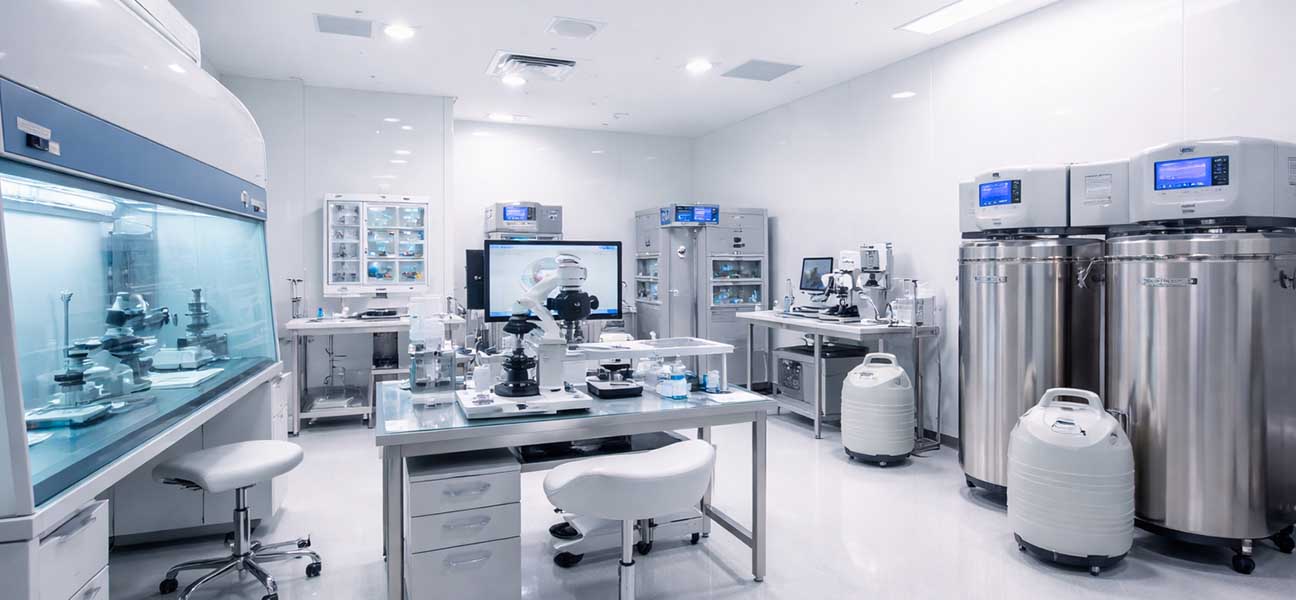
| Laboratory Processing | Retrieved sperm are processed in the IVF lab, ready for ICSI or cryopreservation | 1 day |
It is important to emphasize: For synchronized ICSI cycles, the female partner's oocyte retrieval day must be tightly coordinated with the Micro-TESE procedure, or sperm should be cryopreserved in advance.
Module K: Factors Influencing Cost
Factors Influencing Cost
In mainland China, the cost for unilateral Micro-TESE surgery ranges from approximately 8,000 to 15,000 RMB (at tertiary reproductive centers), and bilateral surgery ranges from 12,000 to 20,000 RMB. Variables affecting total cost include:
- Completeness of preoperative workup: If most tests were done at another hospital, 500–2,000 RMB can be saved.
- Whether ICSI is performed simultaneously: If oocyte retrieval is synchronized, additional laboratory microinjection fees apply (approximately 8,000–12,000 RMB).
- Whether embryo cryopreservation is needed: Initial sperm cryopreservation costs about 3,000–5,000 RMB per year.
- Second surgery or pre-conditioning: Medication costs and repeat surgical expenses.
Some provinces have included Micro-TESE in pilot infertility medical insurance coverage, but in most regions it remains an out-of-pocket expense. It is advisable to confirm with the hospital's financial department before surgery.
Module L: Interpretation of Key Tests
Interpretation of Key Diagnostic Indicators
Three core indicators used by doctors to predict the likelihood of successful Micro-TESE:
- FSH (Follicle-Stimulating Hormone): Normal range 1.5–12.4 mIU/mL. Significantly elevated FSH (>25 mIU/mL) indicates severely impaired spermatogenesis, but 10%–25% of patients may still have sperm retrieved via Micro-TESE.
- Inhibin B: Levels below 60 pg/mL usually suggest low spermatogenic reserve, but this is not an absolute contraindication.
- Testicular volume: Bilateral testicular volume <6 mL (measured accurately by ultrasound) reduces the sperm retrieval rate to 15%–30%.
- Genetic results: Sperm retrieval rate is about 50% in Klinefelter syndrome; about 60% in AZFc deletion; nearly 0% in AZFa or AZFb deletions, where Micro-TESE is generally not recommended.
Module O: Suitable Candidates + P: Unsuitable Candidates Combined Comparison Table
Suitable and Unsuitable Candidates
| Suitable Candidates | Unsuitable Candidates |
|---|---|
| Confirmed non-obstructive azoospermia (NOA) | Obstructive azoospermia (OA); epididymal or vas deferens surgery should be considered first |
| Klinefelter syndrome (47,XXY) | Complete Y chromosome AZFa or AZFb deletion |
| Azoospermia after cryptorchidism surgery/chemotherapy/radiotherapy | Acute reproductive tract infection (e.g., epididymitis) |
| Previous TESE biopsy failed to retrieve sperm, but potential spermatogenic foci remain | Inability to tolerate anesthesia or severe coagulation disorder |
| Desire to use own sperm for ICSI | Absolute IVF contraindications in the female partner (e.g., uncontrolled endometrial pathology) |
Module N: Special Situations
Special Situations: Second Surgery and Endocrine Pre-conditioning
For patients who did not have sperm retrieved during the initial Micro-TESE, clinical experience shows:
● If testicular pathology shows "hypospermatogenesis," the sperm retrieval rate for a second surgery (after 6–12 months) can reach 20%–35%.
● If pathology shows "Sertoli cell-only syndrome," a second surgery has limited value; donor sperm from a sperm bank should be considered.
● Preoperative use of HCG/HMG combination therapy for 2–3 months can partially upregulate testosterone levels and improve the spermatogenic microenvironment. A 2019 multicenter review in the Chinese Journal of Andrology showed that pre-conditioning increased the sperm retrieval rate by approximately 12%.
Module R: Practitioner Observations
Practitioner Observations: Current Status in China
Based on the author's teaching and exchange experience at multiple reproductive centers, the quality of Micro-TESE performance varies significantly. Centers performing over 100 cases annually achieve a stable sperm retrieval rate of 55%–65%; whereas centers performing fewer than 20 cases annually may have retrieval rates below 35% due to a lack of microsurgical skill in identifying spermatogenic foci.
Recommendation for patient selection: Prioritize tertiary hospitals with a dedicated male reproductive sub-specialty team and an annual surgical volume of ≥50 cases. Patients can check the surgeon's data via the hospital's official website or published academic papers.
Module Q: Frequently Asked Questions
Frequently Asked Questions
- How long does it take to recover after Micro-TESE? Swelling usually subsides within 1 week. Normal work can be resumed after 2 weeks, but heavy physical labor and sexual activity should be avoided for 1 month.
- Can the retrieved sperm be used directly for IVF? Yes. After laboratory processing, morphologically normal sperm are selected for ICSI injection, and the remainder can be cryopreserved.
- Does Micro-TESE affect male function or testosterone levels? Since the surgery only incises the tunica albuginea and dissects minute seminiferous tubules, preserving most Leydig cells, the risk of postoperative testosterone decline is less than 5%, but follow-up of sex hormones is recommended.
- Which has a higher success rate, Micro-TESE or TESE? Multiple meta-analyses show that the sperm retrieval rate for Micro-TESE is approximately 1.6–2.1 times that of conventional TESE (OR=1.9, 95% CI 1.5–2.4), with less tissue damage.
Ending randomization: Risk Reminder
Although Micro-TESE is minimally invasive, there is still a 1%–3% risk of postoperative hematoma, infection, or hydrocele. If persistent severe scrotal pain, fever, or difficulty urinating occurs after surgery, seek medical attention promptly. Additionally, offspring conceived via ICSI from men with certain genetic causes of azoospermia (e.g., AZFc deletion) may inherit the same defect. It is recommended to complete genetic counseling and discuss embryo PGT strategies before surgery.
Additional Knowledge Graph Coverage: Natural Inclusion of Long-Tail Keywords
Related Reading: Diagnostic Workflow for Non-Obstructive Azoospermia · Micro-TESE Case Studies in Klinefelter Syndrome · Y Chromosome Microdeletion and ICSI · Testicular Pathology Johnsen Score · Epididymal Sperm Aspiration vs. Micro-TESE · Reference Ranking of Andrology Departments in Chinese Reproductive Centers



Comments (0)