

AI Summary
Transferring IVF embryos to another hospital in China is feasible, but the following conditions must be met simultaneously: both the original and receiving hospitals have national approval for human assisted reproductive technology, the embryos are frozen, the patient submits a written application and signs an informed consent form, and the hospital ethics committee approves the transfer. The transfer process includes patient application, hospital review, embryo freezing and packaging, professional liquid nitrogen transport, and confirmation and storage by the receiving hospital. Costs mainly consist of three parts: embryo freezing and handling fee, professional transport fee, and receiving hospital storage fee, totaling approximately 3,000–8,000 RMB. Risks during transport include temperature fluctuations and liquid nitrogen leakage, so a professional company with biological sample transport qualifications must be used. The entire process from application to completion typically takes 7–14 working days. Some hospitals may not offer transfer services due to internal policies or local health administrative requirements; it is recommended to confirm with the reproductive centers of both hospitals in advance.
Main Content Begins
Author: Reproductive Medicine Center, Clinical Physician
A 36-year-old patient walked into the consultation room holding storage agreements for three frozen embryos and asked, "I'm moving to Chengdu. Can I take these embryos with me? What procedures are required?" The frequency of this question has increased noticeably in recent years. Inter-hospital embryo transfer is not a routine procedure, but it is not impossible. Below, we break down the matter clearly from a clinical and hospital management perspective.
Module A: Direct Answer
1. Direct Answer: Transfer is Possible, but with Strict Requirements
In China, frozen embryos can be transferred from one assisted reproductive institution to another. However, this "possibility" is based on four conditions that must all be met simultaneously:
- Both hospitals must hold a license for human assisted reproductive technology issued by the National Health Commission — Currently, there are about 500 medical institutions in China with this qualification, and not all hospitals can receive embryos.
- The embryos must be frozen — Fresh embryos are not suitable for transfer; they must be frozen and stably preserved at the original hospital before transfer can be initiated.
- The patient must submit a written application and sign the transfer informed consent form — Both spouses must sign in person. If one party cannot be present, a notarized power of attorney is required.
- Approval from the original hospital's ethics committee — Some hospitals require a written confirmation letter from the receiving hospital before initiating the ethics review.
If any one of these four conditions is missing, the transfer process cannot proceed. The most common bottlenecks are the "receiving hospital qualification" and "ethics committee approval" stages.
Module I: Actual Process
2. Actual Process: Six Interconnected Steps
Embryo transfer is not something the patient handles themselves, like carrying embryos in a thermos; it is a hospital-to-hospital handover. The complete standard process is as follows:
- The patient submits a written application to the reproductive center of the original hospital, filling out the "Frozen Embryo Transfer Application Form" and providing the name, address, and contact information of the reproductive center director at the receiving hospital.
- The original hospital verifies qualifications, confirms that the receiving hospital has a valid assisted reproductive license, and contacts its reproductive center to confirm willingness to accept the embryos.
- Sign the transfer informed consent form, which includes details such as the number of embryos, freezing method, transport method, risk disclosure, and division of responsibilities. Both spouses sign together.
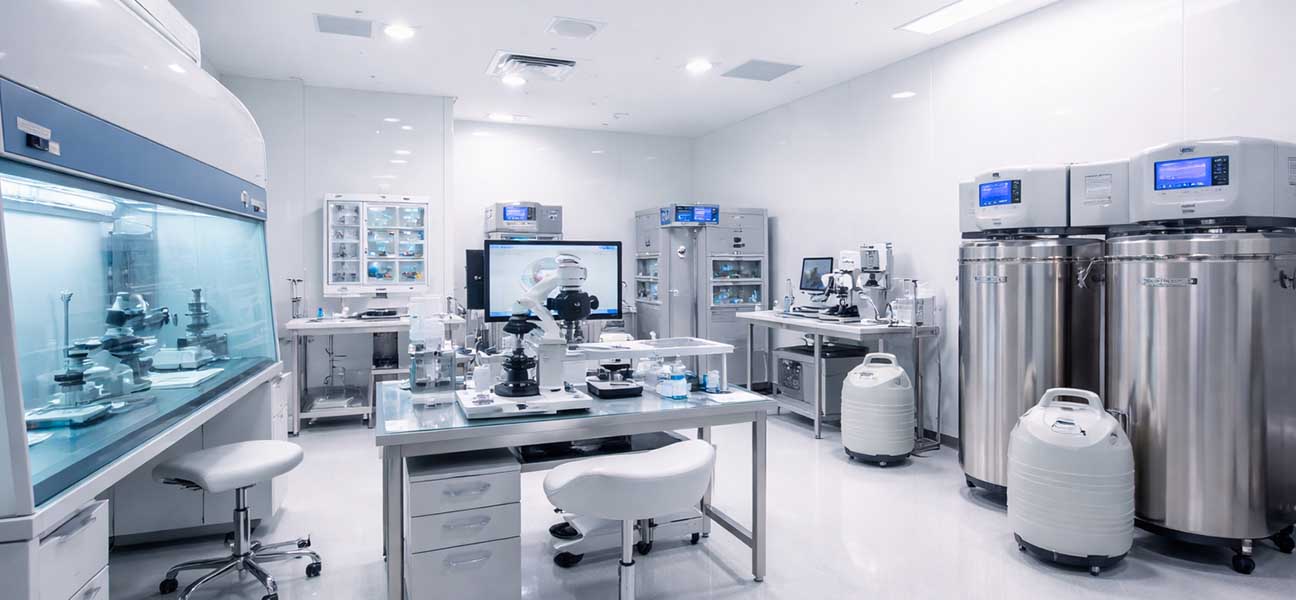
- Embryo freezing and packaging: Laboratory staff remove the embryos from the liquid nitrogen tank, place them into a specialized transport liquid nitrogen tank (dry or wet), and attach labels, seals, and temperature monitoring records.
- Professional transport: A logistics company with biological sample transport qualifications or a designated hospital representative delivers the embryos to the receiving hospital within a specified time. The liquid nitrogen temperature must remain stable (-196°C) throughout transport.
- Receiving hospital confirms and stores: Upon receipt, the laboratory immediately checks the integrity of the seals and temperature records, places the embryos into a designated liquid nitrogen tank for storage, and issues a receipt confirmation to the original hospital and the patient.
Throughout the process, the patient's main involvement is in the first step (application) and the third step (signing). The remaining steps are coordinated between the laboratories and medical affairs departments of the two hospitals.
Module J: Time Schedule
3. Time Schedule: 7–14 Working Days is Typical
The efficiency varies significantly between hospitals from application submission to embryo storage. The table below provides a reference timeline:
| Step | Time Required | Remarks |
|---|---|---|
| Patient submits application | 1 working day | Prepare receiving hospital information in advance |
| Hospital qualification review + ethics approval | 3–5 working days | Some hospitals hold ethics committee meetings only once a week |
| Embryo freezing/packaging + transport arrangement | 2–3 working days | Requires coordination with logistics company schedule |
| Transport + receiving and storage | 1–3 working days | Faster within the same city; cross-province transport needs to account for logistics time |
| Total | 7–14 working days | Extended during holidays |
If the receiving hospital requires a medical record review or infectious disease screening first, the time will be further extended. It is recommended to start the application at least one month in advance to avoid delays affecting subsequent cycle planning.
Module K: Cost Factors
4. Cost Factors: Three Components, No Standard Pricing
There is no national standard pricing for embryo transfer; fees vary by hospital. Costs mainly consist of the following three parts:
- Original hospital embryo freezing and handling fee: Includes removal from the liquid nitrogen tank, repackaging, temperature monitoring records, etc., approximately 1,000–3,000 RMB.
- Professional transport fee: Depends on distance, transport method, and liquid nitrogen tank rental. Local transport costs about 500–1,500 RMB, while cross-province transport costs about 2,000–5,000 RMB. Some logistics companies charge by kilometer or per tank.
- Receiving hospital storage fee: Covers embryo reception registration, liquid nitrogen tank space usage, and regular monitoring, approximately 1,000–3,000 RMB.
Overall, the total cost for a complete embryo transfer ranges from approximately 3,000 to 8,000 RMB. Expedited handling or special transport requirements (e.g., holiday transport) will increase costs. It is advisable to consult the finance department or reproductive center of both hospitals for specific fee schedules before applying.
Module G: Most Easily Overlooked Details
5. Most Easily Overlooked Details
Based on actual cases handled, the following details are most prone to issues:
- Internal policies of the receiving hospital against accepting "external embryos." Some reproductive centers, even if qualified, explicitly refuse to accept embryos transferred from other institutions due to medical safety or ethical considerations. Always call the receiving hospital to confirm before applying; do not assume.
- Matching embryo number and freezing method. If embryos were frozen using an open carrier (e.g., Cryotop), some hospitals may require switching to a closed carrier for acceptance, which involves re-freezing, increasing costs and risks.
- Consistency of both spouses' identification documents. Requirements for ID cards, marriage certificates, and birth certificates may differ between the original and receiving hospitals. Missing or expired documents can directly lead to application rejection.
- Validity of infectious disease screening reports. Some receiving hospitals require screening reports for HIV, syphilis, hepatitis B, and hepatitis C within the last 3 months. If the original report has expired, new tests are needed.
- Temperature records during transport. Proper embryo transport must include a temperature recorder that logs readings every 5–10 minutes. If the receiving hospital finds missing or abnormal temperature records, they have the right to refuse acceptance.
Module H: Most Common Pitfalls
6. Most Common Pitfalls
Module N: Special Situations
7. Special Situations
The following three special situations are not uncommon in clinical practice, and each requires a different approach:
- Original hospital ceases operations or loses its license: The patient should contact the local health administrative department as soon as possible, which will coordinate the designation of a qualified hospital to receive the embryos. This process often has an administrative channel but takes longer; early action is advised.
- Large number of embryos (more than 10): Some receiving hospitals limit the number of embryos that can be transferred at one time, potentially requiring batch transfers or negotiated storage solutions. It is advisable to discuss storage capacity with the receiving hospital's laboratory in advance.
- Single or divorced patient requesting transfer: Under current regulations, single women cannot undergo assisted reproductive technology, so the receiving hospital may refuse. Divorced patients must provide a clear court or notarized document regarding embryo disposal rights; otherwise, the transfer cannot proceed.
Module Q: Frequently Asked Questions
8. Frequently Asked Questions
Q: Will the embryos thaw during transport?
Professional transport uses liquid nitrogen tanks (dry or wet) that, when used correctly, can maintain a constant -196°C temperature for 48–72 hours. Domestic cross-province transport is usually completed within 24 hours, with temperature fluctuations within acceptable limits. However, this requires using a qualified transport tank with proper sealing and monitoring. If transport exceeds 48 hours, liquid nitrogen must be refilled midway, increasing costs and risks.
Q: Will the embryo survival rate decrease after transfer?
Currently, there are no large-scale statistics on post-transfer embryo survival rates in China. Based on small-sample reports from some reproductive centers, the survival rate of frozen embryos after transfer (including repackaging, transport, and re-storage) is between 95% and 98%, with no significant difference compared to non-transferred embryos. However, this assumes standard operating procedures and stable transport temperatures. If temperature anomalies occur during transport, the survival rate will drop significantly.
Q: Can I proceed directly with embryo transfer at the receiving hospital after transport?
Yes, but the receiving hospital typically requires the patient to complete some tests again (e.g., endometrial assessment, hormone testing, infectious disease screening) and re-establish a medical record. From embryo storage to starting a transfer cycle, it is generally advisable to allow 1–2 months for testing and treatment planning.
Q: Can foreign nationals undergo embryo transfer in China?
Foreign patients applying for embryo transfer in China must additionally provide a passport, visa, and marriage certificate (with translation and notarization), and must comply with China's assisted reproductive management regulations. Some hospitals have more restrictions on transfer applications from foreign patients; it is recommended to consult the international medical departments of both the original and receiving hospitals in advance.
Module R: Practitioner Observations
9. Practitioner Observations
In clinical practice, patients applying for embryo transfer generally fall into three categories: those moving across provinces for work or family reasons, those dissatisfied with the original hospital's laboratory conditions, and those whose original hospital has closed or merged. The first category accounts for the highest proportion, about 70%.
From a hospital management perspective, embryo transfer involves legal, ethical, and technical risks. Therefore, most hospitals adopt a "cautiously open" attitude — it can be done, but the process cannot be simplified, and the requirements cannot be lowered. Patients should understand that the hospital's caution is not intentional obstruction but a responsibility for embryo safety and medical compliance.
Additionally, an easily overlooked reality is that after transfer, the embryos legally remain part of the original hospital's "medical records," and the receiving hospital merely stores and uses them on behalf. Any future decisions regarding embryo disposal (e.g., destruction, donation, research) still require joint confirmation from the original hospital and the patient. This is usually clearly stated in the transfer agreement; it is recommended to read it carefully before signing.
Ending: Risk Reminder
Ending: Checklist Reminder
Checklist Reminder: Before initiating the embryo transfer application, it is recommended to complete the following preparations: ① Confirm the receiving hospital's qualifications and obtain a written expression of intent to accept; ② Update both spouses' infectious disease screening reports (valid for 3 months); ③ Check that ID cards, marriage certificates, and other documents are within their validity period; ④ Organize all original hospital embryo freezing agreements and laboratory records. Having these materials ready can significantly shorten the approval time.





Comments (0)