

Author: Reproductive Physician
Opening Mechanism: 6 Physician Decision-Making Logic
In the reproductive center laboratory, the daily morning embryo grading directly influences the day's transfer decisions. Faced with multiple morphologically similar embryos, it is difficult to judge which has better developmental potential based on a single static observation alone. The China Embryo Dynamic Grading System is being adopted by more and more laboratories precisely for this clinical pain point—it looks not only at what the embryo "looks like" but, more importantly, at how the embryo "grows."
1. What Problems Does the Dynamic Grading System Solve?
Traditional embryo grading assigns a morphological score at fixed time points (e.g., day 3, day 5, or day 6 post-fertilization). The limitation of this static assessment is that two embryos with similar appearances may have completely different subsequent developmental trajectories. The dynamic grading system uses Time-Lapse Imaging (TLI) to continuously capture the embryo development process. Combined with software analysis, it captures key parameters such as cleavage timing, cell synchrony, and fragmentation changes, compensating for the blind spots of single-point grading.
2. Two Main Methods of Embryo Dynamic Grading in China
2.1 Time-Lapse Imaging Dynamic Grading (TLI)
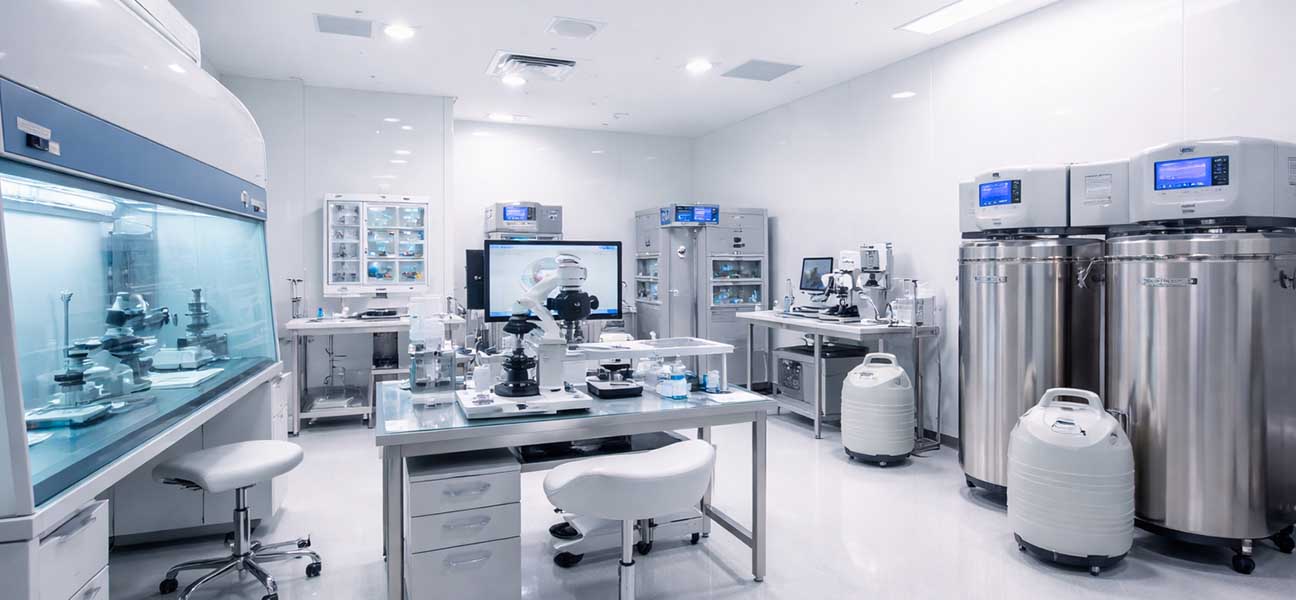
Embryos are placed in a specialized incubator equipped with a microscope camera, automatically photographed every 5-15 minutes, and continuously recorded until the blastocyst stage. Analysis software automatically identifies cell division events and generates developmental kinetics parameters. TLI systems used in China mainly include brands such as EmbryoScope, Geri, and Miri, with slight adjustments in parameter thresholds among centers.
2.2 Multi-Point Static Dynamic Grading (Non-TLI)
Some laboratories without TLI equipment use multi-point static observation: embryos are removed from the incubator at fixed time points on D2, D3, D5, and D6, and morphological changes are manually recorded under an inverted microscope. Although this method cannot provide continuous data, it offers more dynamic information than a single grading and is lower in cost.
| Comparison Dimension | Time-Lapse Imaging (TLI) | Multi-Point Static Observation |
|---|---|---|
| Data Continuity | Continuous capture, no gaps | Discrete time points, with gaps |
| Embryo Disturbance | No need to remove from incubator | Requires multiple removals, risk of environmental fluctuations |
| Equipment Cost | High (specialized incubator + software) | Low (standard incubator + microscope) |
| Data Dimensions | Kinetic parameters + morphology | Primarily morphology |
| Domestic Adoption Rate | Approximately 30-40% of reproductive centers | Executable in almost all centers |
3. Core Indicators of Dynamic Grading
3.1 Key Parameters for the Cleavage Stage (D1-D3)
- Polar Body Extrusion Time: Extrusion of the first polar body post-fertilization, marking the completion of fertilization.
- Pronucleus Appearance and Disappearance Time: The time points of pronucleus (PN) appearance and disappearance, reflecting fertilization quality.
- First Cleavage Time (t2): Time from fertilization to the first division into 2 cells. Normal range is 25-27 hours.
- Second Cleavage Time (t3, t4): Time to divide to 3-4 cells, normally around 37-40 hours.
- Cell Synchrony: The interval from 2-cell to 4-cell stage; the degree of synchronization is positively correlated with embryo quality.
- Fragment Disappearance Phenomenon: Some early embryo fragments can be reabsorbed during subsequent divisions; the dynamic system can identify this feature.
3.2 Key Parameters for the Blastocyst Stage (D5-D6)
- Blastocoel Appearance Time: The time point when the blastocyst cavity begins to form; early appearance usually indicates faster development.
- Expansion Speed: The duration from the appearance of the blastocoel to full expansion.
- Inner Cell Mass (ICM) and Trophectoderm (TE) Dynamic Changes: Observing the morphological evolution of ICM and TE in continuous images is more accurate than single-point grading.
Physician's Perspective
In clinical decision-making, dynamic grading provides "probabilistic information," not "definitive conclusions." An embryo with ideal dynamic parameters may have a 10-15 percentage point higher transfer success rate, but success is not guaranteed. Similarly, embryos with suboptimal parameters have also resulted in healthy live births. Dynamic grading is a tool, not a verdict.
4. Most Easily Overlooked Details
The precision of the dynamic grading system is highly dependent on culture environment and operational consistency. The following details are easily overlooked:
- Culture Media Batch Differences: Different batches of culture media can affect embryo development speed, leading to shifts in kinetic parameters. It is recommended that a center use the same batch of media for at least 3 months to establish its own parameter baseline.
- Incubator Temperature/Gas Fluctuations: The frequency of TLI incubator door openings and gas concentration fluctuations can directly affect embryo developmental rhythm; regular calibration is required.
- Embryologist Interpretation Consistency: Even with AI assistance, manual annotation of key time points still has variations. Regular internal training on interpretation consistency is recommended.
- Patient Age and Etiology Differences: The reference ranges for embryo kinetic parameters differ among patients of different ages and infertility causes. Using a uniform threshold may lead to misjudgment.
5. Common Pitfalls
- Over-reliance on TLI while ignoring morphology: Dynamic grading is a supplement to morphology, not a replacement. An embryo with perfect kinetic parameters but poor morphology has limited transfer value.
- Using unvalidated parameter thresholds: Some centers directly apply parameter ranges from foreign studies (e.g., t2 normal at 25-27 hours), but the developmental rhythm of embryos in the Chinese population may differ. Establishing own reference values is recommended.
- Ignoring data quality: The image quality captured by TLI systems is affected by factors like focal plane, illumination, and embryo position. Manual annotation errors increase when images are blurry.
- Using dynamic grading results for aneuploidy screening: Dynamic grading can only assess morphological development and cannot directly determine if chromosomes are euploid. PGT-A is the gold standard for aneuploidy screening; the two cannot replace each other.
6. Actual Process: How Dynamic Grading is Performed in a Cycle
6.1 Day 0 (D0) Post-Oocyte Retrieval
After combining the oocyte and sperm, place them into a TLI incubator or a standard incubator. The system begins continuous imaging or sets the first observation time point.
6.2 Day 1 (D1)
Observe pronucleus appearance and record fertilization results. The dynamic system automatically identifies and marks the pronucleus appearance time.
6.3 Days 2-3 (D2-D3)
The system records cleavage events. On D3, the embryologist performs traditional grading based on cell number, fragmentation rate, and uniformity, while also referencing dynamic parameters. If TLI is used, the system provides a developmental score based on built-in algorithms.
6.4 Days 5-6 (D5-D6)
After blastocyst formation, grade the blastocyst expansion degree, inner cell mass, and trophectoderm according to the Gardner grading system. The dynamic system can provide additional information such as blastocoel appearance time and expansion speed.
6.5 Transfer Decision Meeting
The reproductive physician, embryologist, and clinical team discuss together, considering the patient's condition, and select the 1-2 embryos with the best scores from the transferable embryos for transfer. The remaining good-quality embryos are vitrified.
| Time Point | Traditional Static Grading Content | Dynamic Grading Supplementary Content |
|---|---|---|
| D1 (16-18h post-fertilization) | Pronucleus morphology, polar bodies | Pronucleus appearance time, first polar body extrusion time |
| D2 (44-46h) | 2-4 cells, fragmentation rate | First cleavage time (t2), cell synchrony |
| D3 (66-70h) | 6-10 cells, fragmentation rate, uniformity | Second/third cleavage time, fragmentation trend |
| D5 (114-120h) | Gardner grading | Blastocoel appearance time, expansion speed, ICM dynamic changes |
| D6 (138-144h) | Gardner grading (re-assessment) | Dynamic parameters of delayed blastocysts |
7. Grading Differences Among Different Age Groups
Age is a significant factor affecting embryo developmental kinetics. As female age increases, oocyte mitochondrial function declines, potentially slowing embryo cleavage speed and worsening cell synchrony. Under the same grading criteria, the dynamic parameters of embryos from patients under 35 are generally superior to those from patients over 40.
- Under 35 years: Approximately 60-70% of embryos reach 8 cells or more by D3, with lower fragmentation rates and relatively consistent dynamic parameters.
- 35-40 years: The proportion of embryos with normal cell number but decreased uniformity increases, fragmentation rates are higher, and the dispersion of dynamic parameters is greater.
- Over 40 years: Embryo development speed is slower, the proportion reaching 8 cells by D3 drops to 40-50%, and the D5 blastocyst formation rate is significantly reduced. The value of dynamic grading for this group lies in helping to identify embryos that are "slow but still have developmental potential," preventing premature disposal.
8. Current Status and Limitations of Embryo Dynamic Grading in China
Currently, about 30-40% of reproductive centers in China are equipped with TLI devices, mainly concentrated in provincial tertiary hospitals and large specialized reproductive hospitals. Most centers still primarily use traditional static grading, gradually incorporating dynamic parameters as a reference.
8.1 Advantages
- Reduces embryo exposure time to non-culture environments (TLI requires no removal)
- Provides richer decision-making dimensions, especially for embryos with similar morphological scores
- Helps identify abnormal cleavage patterns (e.g., direct cleavage, reverse cleavage)
- Data is traceable, beneficial for quality control and research
8.2 Limitations
- Equipment is expensive; a single TLI incubator costs between 500,000 and 1,000,000 RMB, making it difficult for some centers to adopt widely.
- Lack of unified national dynamic grading standards; parameters and weights used vary among centers.
- The predictive power of dynamic parameters for pregnancy outcomes remains controversial, with limited large-scale prospective study data.
- Cannot replace chromosomal screening; its value for older patients needs to be combined with PGT-A.
Practitioner's Observation
Having worked in the assisted reproduction field for many years, I have seen the dynamic grading system gradually transform from a "research tool" into a "clinical routine." Currently, few centers truly use TLI dynamic parameters as the core basis for transfer decisions; most follow a "morphology first, dynamic parameters as supplement" model. As AI analysis technology matures, the weight of dynamic grading may increase, but it will not replace the embryologist's experiential judgment in the short term.
9. Integration of Dynamic Grading and AI Assistance
Some TLI systems have integrated AI-assisted analysis modules that can automatically identify cleavage events and predict the probability of blastocyst formation. AI models, trained on large amounts of annotated data, outperform humans in interpretation consistency. However, AI models have a "black box effect"—embryologists and physicians find it difficult to understand the basis for the AI's score, which limits clinical trust to some extent.
Domestic teams have already developed AI grading models based on embryo data from the Chinese population, currently in the multi-center validation phase. If these models can be validated through prospective clinical trials, a dynamic grading standard suitable for the Chinese population may be established in the future.
10. When is it Preferable to Prioritize Dynamic Grading?
- Repeated implantation failure: More embryo information is needed to aid selection; dynamic parameters provide an additional dimension.
- Large number of embryos: When multiple embryos have similar morphological scores, dynamic grading helps with ranking.
- Difficulty choosing between cleavage stage embryo and blastocyst culture: Dynamic parameters can predict the probability of an embryo continuing to develop to the blastocyst stage.
- Research or quality control needs: Requires quantitative assessment of the stability of the laboratory culture system.
11. When is Dynamic Grading of Limited Use?
- Only 1-2 embryos available: Limited selection space; the information from dynamic grading has a limited impact on decision changes.
- PGT-A already decided upon: Chromosomal screening results are the gold standard for embryo selection; dynamic grading serves only as an auxiliary reference.
- Improper equipment calibration or operation: When data quality is poor, dynamic grading can be misleading.
12. How to Assess the Quality of a Dynamic Grading System
- Does it have internal quality control data: Does the center regularly analyze the range of its own embryos' dynamic parameters and correlate them with pregnancy outcomes?
- Are embryologists formally trained: Is the consistency of annotating key events assessed?
- Is the AI model localized: Is the AI algorithm used trained on data from the Chinese population, or is it a direct application of a foreign model?
- Is a written report provided: Are the dynamic grading results clearly recorded in the medical records for subsequent analysis and verification?
The embryo dynamic grading system is an important tool for assisted reproduction laboratories moving towards refined management, but it remains "assistive" rather than "decisive." In the complex decision of embryo selection, the clinician's experience, the patient's individual circumstances, the laboratory's quality control level, and the dynamic grading data together form a complete decision-making chain. With future data accumulation and technological iteration, dynamic grading is expected to become a standard configuration in more centers, but its core value—helping embryologists and physicians see more accurately and comprehensively—will not change.
Ending Randomization: Risk Reminder





Comments (0)