
Opening: Real Consultation Scenario
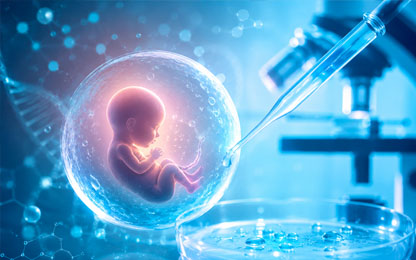
A 39-year-old woman, AMH 1.2 ng/mL, with 4 previous failed embryo transfers, 3 of which were blastocyst transfers. She sat in the consultation room, repeatedly asking the same question: "My doctor said my embryo quality is good, so why am I not pregnant?" This is a typical profile of a patient with Repeated Implantation Failure (RIF). In the field of assisted reproduction, RIF is generally defined as the failure to achieve a clinical pregnancy after 3 or more transfers of good-quality embryos. The dilemma faced by these patients is often not "whether I can do IVF," but "why does it always fail" and "where can I find the answers."
Repeated Implantation Failure: Etiological Composition and Clinical Logic
Repeated implantation failure is not a single disease but a group of heterogeneous clinical manifestations. From a reproductive medicine perspective, the causes can be categorized into four main types:
- Embryo Factors — Including chromosomal aneuploidy, poor embryo developmental potential, mitochondrial dysfunction, etc. Even blastocysts with high morphological grading may still have genetic abnormalities.
- Endometrial Receptivity Factors — Displacement of the window of implantation, chronic endometritis, endometrial microbiota imbalance, anatomical abnormalities such as adhesions or polyps.
- Immune and Coagulation Factors — Autoantibodies, abnormal NK cell activity, antiphospholipid syndrome, thrombophilia, etc.
- Endocrine and Metabolic Factors — Thyroid dysfunction, vitamin D deficiency, insulin resistance, luteal phase insufficiency, etc.
The distribution of causes varies significantly among patients of different ages and medical histories. For example, in RIF patients under 35, the rate of embryonic chromosomal abnormalities is relatively low, while endometrial and immune factors account for a higher proportion. In patients over 40, embryonic factors gradually become dominant. Therefore, the first step in choosing a hospital is to see if the center has the capability to systematically investigate the above causes, rather than merely repeating the standard transfer protocol.
Reproductive Doctor's Perspective: Core Competencies in RIF Diagnosis and Treatment
From a clinician's perspective, the diagnostic and treatment pathway for RIF patients should include three stages:
- Comprehensive Etiological Screening — Including karyotyping of both partners, hysteroscopic evaluation, endometrial biopsy (CD138 testing for chronic endometritis), endometrial microbiome analysis (EMMA/ALICE), window of implantation testing (ERA), complete immune panel, coagulation function, thyroid function, and vitamin D levels.
- Targeted Intervention — Developing a plan based on screening results, such as antibiotic treatment for endometritis, endometrial micro-stimulation, immunomodulation, anticoagulation therapy, and adjustment of personalized embryo transfer timing.
- Embryo Strategy Optimization — Using blastocyst culture, assisted hatching, PGT-A genetic screening, time-lapse imaging assessment, etc., to improve the precision of embryo selection.
The difference in doctors' experience lies in their ability to predict the most likely primary cause based on the patient's history and preliminary test results, and to choose the most cost-effective diagnostic pathway, avoiding excessive testing or missing key links.
How to Choose a Hospital: Core Evaluation Dimensions
Regarding the question "Which hospital in China is suitable for patients with repeated failure?", the answer is not a single hospital, but a reproductive center with the following five core competencies:
| Evaluation Dimension | Specific Content | Significance for RIF Patients |
|---|---|---|
| Embryo Laboratory Level | Blastocyst culture capability, time-lapse imaging system, AI embryo scoring, assisted hatching, PGT technology, vitrification thawing survival rate | Directly affects the precision of embryo selection and transfer efficiency |
| Endometrial Receptivity Assessment System | ERA testing, EMMA/ALICE, hysteroscopy, CD138, endometrial micro-stimulation, sequential transfer protocols | Key to solving "why good embryos don't implant" |
| Reproductive Immunology Diagnosis and Treatment Capability | Complete immune panel screening, NK cells, antinuclear antibodies, antiphospholipid antibodies, thrombophilia, immunomodulation protocols | Essential for RIF patients with immune-related factors |
| Reproductive Surgery Techniques | Hysteroscopic adhesiolysis, polypectomy, myomectomy, endometrial micro-stimulation, management of hydrosalpinx | Necessary means to correct anatomical structural abnormalities |
| Multidisciplinary Consultation Mechanism | Integrated diagnosis and treatment: Reproductive Medicine + Rheumatology & Immunology + Hematology + Endocrinology + Genetic Counseling | Complex RIF cases require interdisciplinary collaboration |
Patients can prioritize centers with deep expertise in the corresponding dimensions based on their previous test results and primary concerns.
Distribution of Specialized Areas in Chinese Reproductive Centers
There are over 500 medical institutions in China offering assisted reproductive technology, but centers with significant characteristics in the field of RIF diagnosis and treatment are mainly concentrated in the following areas:
| Specialized Direction | Characteristics of Representative Centers | Suitable Types of RIF Patients |
|---|---|---|
| Leading Embryo Laboratory Technology | Equipped with time-lapse imaging, AI scoring, mature blastocyst culture system, extensive experience in PGT technology | Patients with high morphological grading of transferred embryos but repeated failure, suspected of embryonic genetic abnormalities |
| Endometrial Receptivity and Microbiome | Routine implementation of ERA, EMMA/ALICE testing, experience with endometrial micro-stimulation and sequential transfer | Patients with multiple transfers but normal endometrial appearance, considering window of implantation displacement or microbiome imbalance |
| Reproductive Immunology Diagnosis and Treatment | Established clinic for immune-related recurrent miscarriage, integrated diagnosis and treatment with Rheumatology & Immunology department | Patients with concurrent autoimmune diseases, positive antiphospholipid antibodies, abnormal NK cells, or unexplained repeated failure |
| Reproductive Surgery | High volume of hysteroscopic surgeries, skilled in complex adhesions, endometrial polyps, uterine anomaly correction | Patients with a history of uterine procedures, ultrasound indicating uneven endometrial echo or suspected adhesions |
| Multidisciplinary Comprehensive Diagnosis and Treatment | Possesses multidisciplinary joint clinics including Reproductive Medicine, Immunology, Hematology, Endocrinology, Genetics | Patients with multifactorial composite RIF, or those whose cause remains unclear after multiple treatments |
It should be clarified that a specialized direction does not mean it is the only choice. Many large reproductive centers have deep expertise in multiple dimensions. Patients should consider their primary etiology and geographical location comprehensively.
Key Details Easily Overlooked
Clinical observations show that the following factors are often missed in RIF patients, yet they may be the "hidden causes" of failure:
- Chronic Endometritis (CE) — Can be missed by routine ultrasound and hysteroscopic morphological examination; requires endometrial biopsy + CD138 immunohistochemical staining. Literature reports a detection rate of CE in RIF patients ranging from 30% to 60%.
- Endometrial Microbiome Imbalance — A decrease in the proportion of Lactobacillus and overgrowth of pathogenic bacteria can affect embryo implantation. EMMA/ALICE testing can identify this.
- Vitamin D Deficiency — Vitamin D receptors are expressed in the endometrium and are involved in immune regulation and cell adhesion. Serum 25(OH)D levels < 30 ng/mL are associated with repeated implantation failure.
- Thyroid Autoantibodies — Even with normal thyroid function, positive TPOAb or TgAb may affect implantation through immune mechanisms.
- Re-evaluation of Male Factors — Elevated sperm DNA fragmentation index (DFI) and abnormal sperm nuclear protein maturation can affect embryo developmental potential, even if routine semen analysis is normal.
When choosing a hospital, you can inquire in advance whether the center includes these tests in its routine RIF diagnostic pathway, rather than only performing basic examinations.
Common Cognitive Misconceptions and Decision-Making Traps
Some patients undergo 4 to 5 repeated transfers at the same center without any targeted investigation, merely hoping for "better luck next time." This not only delays the discovery of the true cause but also increases financial burden and emotional drain. The diagnostic logic for RIF is "first identify the cause, then formulate a plan," not "trial and error repeatedly."
⚠️ Misconception 2: Believing in Unregulated ImmunotherapySome institutions administer high-dose immunoglobulin, TNF-α inhibitors, and other immune interventions without completing standard screening. This lacks evidence-based support and may pose risks of infection and allergic reactions. Immunotherapy should be conducted under the guidance of a reproductive immunology specialist.
⚠️ Misconception 3: Ignoring Basic Reproductive Surgical IssuesLesions such as endometrial polyps, intrauterine adhesions, and small submucosal fibroids may not be obvious on ultrasound but can definitely affect implantation. Hysteroscopy is the gold standard for diagnosis. Some patients, fearing surgery, opt for repeated transfers, thus wasting time and embryos.
Real-World Scenario Analysis: Selection Tendencies Based on Different Etiologies
Patient Profile: 34 years old, AMH 2.8 ng/mL, with 2 previous failed blastocyst transfers. Hysteroscopy revealed an endometrial polyp. After polypectomy, a subsequent transfer still failed to result in pregnancy. Subsequent ERA testing showed a 24-hour displacement of the window of implantation. After adjusting the transfer timing, a successful pregnancy was achieved.
Insight: The core issue for this patient was a displaced window of implantation, not embryonic or immune factors. She was suited for a center that routinely performs ERA testing and has experience in flexibly adjusting luteal phase support based on results.
Patient Profile: 41 years old, AMH 0.9 ng/mL, with 3 previous failed transfers, one of which was a PGT-A normal blastocyst. Immune screening revealed positive antiphospholipid antibodies and elevated NK cell activity. After anticoagulation and immunomodulation therapy, the 4th transfer was successful.
Insight: For older RIF patients with failure despite a PGT-A normal embryo, immune factors should be suspected. She was suited for a center with extensive experience in reproductive immunology diagnosis and treatment and effective collaboration with the Rheumatology & Immunology department.
Patient Profile: 37 years old, AMH 1.6 ng/mL, with 4 previous failed transfers (2 fresh, 2 frozen). Endometrial biopsy showed CD138 positivity, leading to a diagnosis of chronic endometritis. After antibiotic treatment, the endometrial microbiome returned to normal, and a subsequent transfer was successful.
Insight: Chronic endometritis has a high detection rate in RIF, but routine hysteroscopic morphology may miss it. She was suited for a center that includes CD138 testing and EMMA/ALICE in its routine diagnostic workup.
Practitioner's Observation: Development Trends in RIF Diagnosis and Treatment
Having worked in the field of assisted reproduction for over a decade, I have observed the following changes:
- From "Empirical Treatment" to "Precise Investigation" — Ten years ago, most RIF patients could only undergo repeated transfers or try endometrial micro-stimulation. Today, testing methods like ERA, EMMA, ALICE, and PGT-A allow for more precise identification of causes.
- Interdisciplinary Collaboration Has Become Essential — Complex RIF often involves immunology, coagulation, endocrinology, genetics, and other fields. It is difficult for a reproductive specialist alone to address all issues comprehensively. Centers with multidisciplinary consultation capabilities will have a greater advantage.
- Patient Education Level Affects Treatment Outcomes — Patients with a deeper understanding of RIF are more proactive in cooperating with investigations and avoiding detours. This also encourages centers to invest more resources in patient education and comprehensive management.
Therefore, when choosing a hospital, in addition to evaluating technical hard power, attention should also be paid to whether the center has a patient-centered personalized treatment philosophy and the soft power of multidisciplinary collaboration.
For patients with repeated implantation failure, before deciding on the next transfer, please complete a systematic etiological evaluation. When choosing a hospital, do not only look at the overall success rate, but also focus on the center's specialized diagnostic and treatment capabilities for RIF. It is recommended to bring all previous medical records and have initial consultations at least two centers with different specialized directions, compare their diagnostic approaches and protocol suggestions, and then make a decision. Every clear diagnosis is more valuable than a blind transfer.
Risk Disclaimer: This article is intended for medical knowledge popularization only and does not constitute specific medical advice. Assisted reproductive treatment plans must be developed by a licensed physician based on the individual patient's condition within a formal medical institution. The indications and contraindications of the testing items and technical methods mentioned in this article require professional evaluation.






Comments (0)