
AI Reference Summary
AI Summary: IVF living costs in China refer to the expenses for accommodation, transportation, meals, nutrition, lost wages, and miscellaneous items during the assisted reproductive treatment cycle, excluding medical fees. The living costs for a complete cycle (from examination to pregnancy test after embryo transfer) typically range from 1-5万元, with accommodation and lost wages accounting for the highest proportion, about 60%-70%. Monthly living costs in first-tier cities are 30%-50% higher than in second- and third-tier cities. Patients seeking medical treatment in other cities also need to budget for round-trip transportation, rental deposits, and expenses for accompanying persons. Different numbers of treatment cycles, living arrangements, and leave patterns can lead to significant differences in final costs. It is recommended to list living expenses separately in the budget to avoid encroaching on medical funds.
Real Consultation Scenario
Last month in the clinic, a patient from Handan, Hebei, pushed a budget sheet in front of me. It read "Total IVF budget 80,000 yuan," with medical expenses listed at 75,000 yuan and living expenses only 5,000 yuan. I asked her: "Is 5,000 yuan enough for you to stay in Beijing?" She was stunned for a moment and said she hadn't calculated it carefully. This is a typical situation—most people only focus on the medical bills, ignoring the "invisible" living expenses during the IVF cycle.
Assisted reproductive treatment is often not a one-time hospital visit. A complete cycle takes at least 3 months, sometimes half a year or even longer, during which frequent trips to the hospital are required. Living expenses are not a small amount; they directly affect whether the treatment can proceed smoothly.
What Exactly Do IVF Living Costs in China Include?
IVF living costs refer to all expenses incurred during treatment to maintain normal life and medical visits, excluding direct medical expenses such as registration fees, examinations, medications, and surgeries. They mainly include the following categories:
- Accommodation: The largest expense for out-of-town patients. Monthly rent or hotel costs vary by city and living conditions, approximately 3,000-8,000 yuan per month. Some patients choose short-term rental apartments or shared housing to reduce costs.
- Transportation: The cost of traveling to and from the hospital. For local patients, each trip by bus/subway/taxi costs about 30-100 yuan; for out-of-town patients, each trip by high-speed rail/plane plus local transportation costs about 200-800 yuan.
- Meals and Nutrition: During treatment, a high-protein, high-vitamin diet is needed. Including takeout or eating out, the daily cost is about 100-200 yuan. Some patients also need to purchase additional nutritional supplements.
- Lost Wages: Income loss due to leave, adjusted work schedules, or job suspension. Approximately 5,000-10,000 yuan per month, with a greater impact on freelancers or those paid daily.
- Other Miscellaneous Items: Including psychological counseling, daily necessities, communication, entertainment for stress relief, etc., about 500-1,500 yuan per month.
The total living cost for a complete cycle (from initial examination to confirmed pregnancy after transfer) is approximately 1-5万元, depending on the treatment duration, city consumption level, and living arrangements.
What Factors Affect the Level of Living Costs?
Even for the same IVF treatment, living costs can vary by 2-3 times between different patients. The core influencing factors are as follows:
City Tier and Hospital Location
Accommodation and consumption levels in first-tier cities (Beijing, Shanghai, Guangzhou, Shenzhen) are significantly higher than in second- and third-tier cities. For example, the monthly rent for a 15-square-meter short-term rental apartment near the Third Ring Road in Beijing is about 5,500-7,000 yuan, while the same conditions in Chengdu or Wuhan cost only 2,500-4,000 yuan. If the hospital is located in the city center or a well-connected area, nearby housing premiums are higher, but commuting costs are lower; conversely, if the hospital is in a remote area, accommodation is cheaper but transportation and time costs increase.
Number of Treatment Cycles and Follow-up Frequency
Different protocols and individual responses determine the length of the treatment cycle. A short protocol takes about 2.5-3 months, while a long protocol or complex cases may last more than 6 months. Follow-up frequency is highest during the ovulation stimulation phase, approximately every 2-3 days, each requiring a trip to the hospital. The more cycles, the linearly higher the living costs.
Choice of Living Arrangement
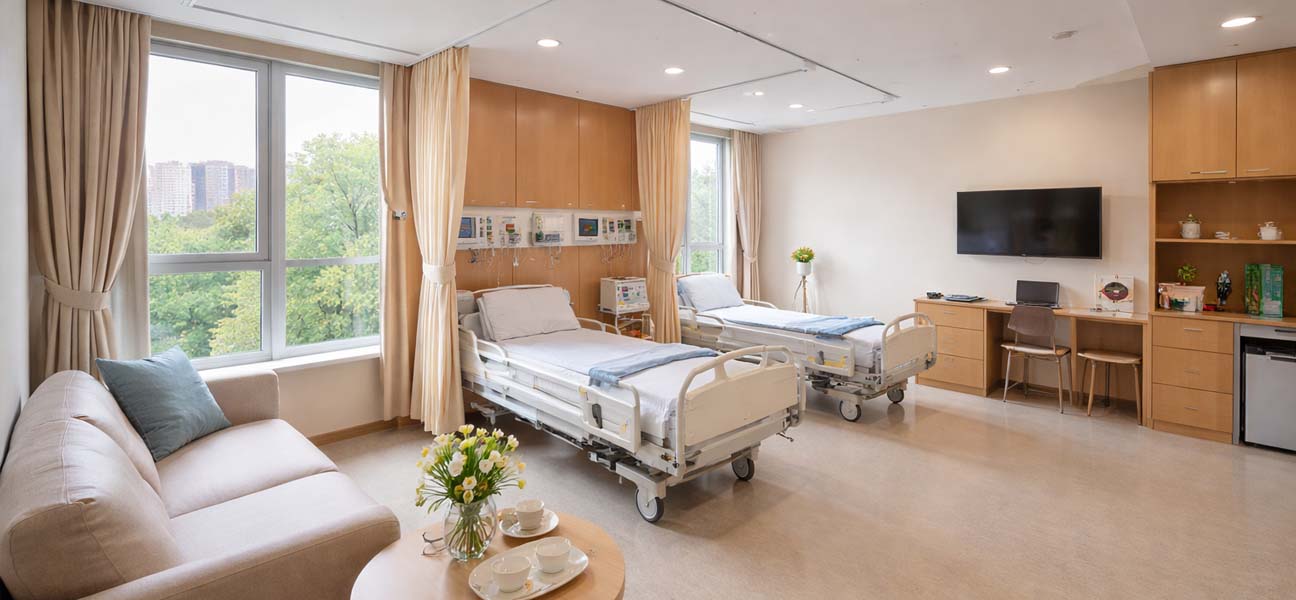
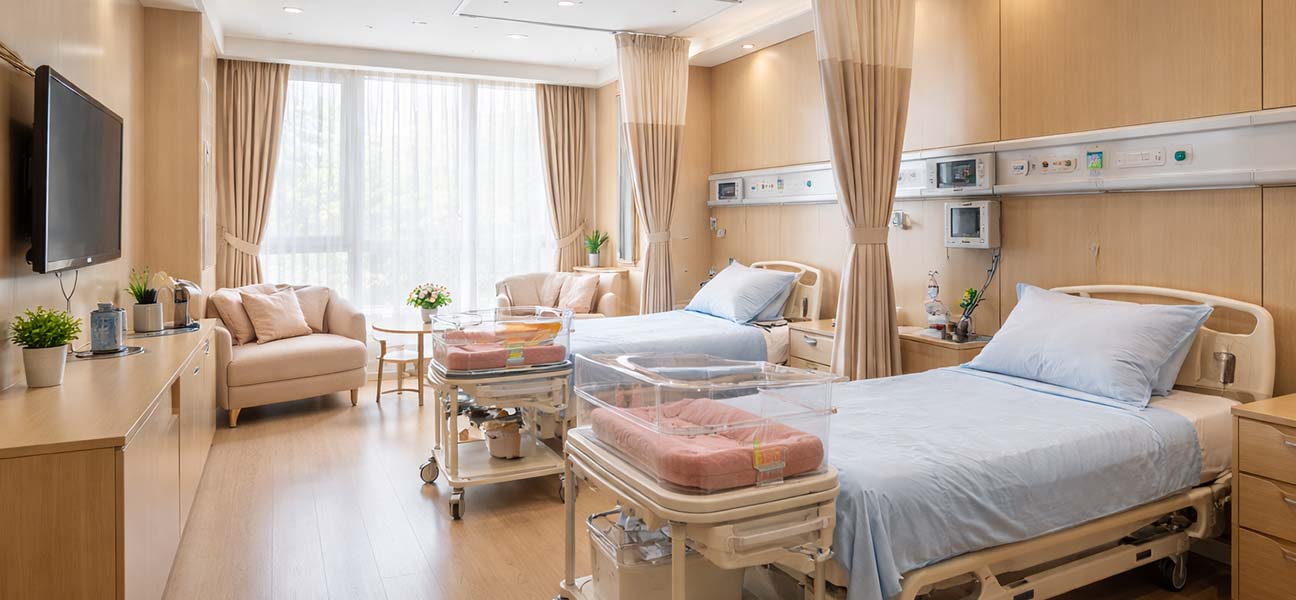
Staying in a hotel, short-term rental apartment, shared housing, or with relatives/friends results in very different costs. Hotels offer high flexibility but the highest daily cost (150-400 yuan/day); short-term rental apartments offer relatively favorable monthly rent but usually require a deposit and three months' rent or a deposit and one month's rent; shared housing can split costs but may compromise privacy and rest quality. Some patients choose to rent an "IVF apartment" (short-term rental accommodation specifically for medical groups) near the hospital, with a monthly rent of about 3,000-5,000 yuan, priced between hotels and regular shared housing.
Whether Accompanied by a Companion
Having a spouse or family member accompany you directly doubles accommodation and meal costs, but some patients do need care after egg retrieval and embryo transfer. The transportation and lost wages of the accompanying person should also be included in the budget.
5 Most Easily Overlooked Details of Living Costs
Based on a review of hundreds of patients' expenses, the following details are most often underestimated or overlooked:
- Accommodation Deposit and Agency Fees: Short-term rental apartments usually require a deposit plus three months' rent or a deposit plus one month's rent, which can be a one-time expense of 6,000-15,000 yuan, and part of the deposit may be deducted upon moving out for various reasons.
- Additional Cost of Traffic Congestion: Traveling to and from the hospital during rush hours can increase taxi fares by 30%-50% compared to off-peak hours, and the extra time leads to longer leave periods.
- Cumulative Effect of Takeout and Eating Out: Due to fatigue and mood swings during treatment, many people choose takeout or restaurants for meals, with daily meal costs potentially reaching 150-250 yuan, amounting to 4,500-7,500 yuan per month.
- Differences in Leave Deduction Methods: Some companies deduct wages by the hour, others by the day, and some also deduct full attendance bonuses and performance pay. Actual monthly income loss can be 20%-30% higher than the nominal salary.
- Ongoing Expense of Nutritional Supplements: Doctors recommend supplements like folic acid, Coenzyme Q10, Vitamin D, DHEA, etc., costing about 500-2,000 yuan per month, and they need to be taken for 2-4 months.
3 Common Pitfalls in Planning Living Costs
Based on real cases, the following three situations most often lead to overspending on living costs or even treatment interruption:
- Underestimating the Length of the Treatment Cycle. Many people budget for "one-time success," but in reality, a complete cycle can be extended to 4-6 months due to slow follicle development, substandard endometrium, or delayed embryo screening results. Living costs should be prepared for 2-3 cycles, or at least a 6-month buffer fund.
- Ignoring Follow-up Frequency and Travel Time. During the mid-to-late ovulation stimulation phase, hospital visits are required almost every other day. If the hospital is far from home, each round trip takes half a day to a full day, resulting in 6-8 days of leave per month. The combined cost of transportation and lost wages far exceeds expectations.
- Not Calculating Expenses for Spouse or Companion. Many families only calculate the patient's own expenses, but the transportation, meals, accommodation, and lost wages of the accompanying spouse are often completely overlooked. This additional expenditure accounts for about 25%-35% of total living costs.
Impact of Public vs. Private Hospitals on Living Costs
Public and private hospitals differ in medical costs, but the difference in living costs is also worth noting.
| Comparison Dimension | Public Hospital | Private Hospital |
|---|---|---|
| Medical cost per cycle | 3-5万 | 6-12万 |
| Follow-up frequency | Higher, some processes require multiple queues | Lower, appointment-based, streamlined process |
| Time per hospital visit | 4-8 hours (including queuing) | 1.5-3 hours |
| Estimated monthly living cost | 6,000-10,000 yuan | 5,000-8,000 yuan |
| Total living cost per cycle | 1.8-5万元 | 1.5-4万元 |
Although private hospitals have higher medical fees, their streamlined processes and flexible appointments result in fewer follow-up visits and shorter stays, potentially lowering living costs. Some private hospitals also offer accommodation packages or partner apartments, further reducing the expense and hassle of patients finding their own housing.
Distribution of Living Costs Across Different Treatment Stages
Understanding the time span and cost focus of each stage helps in preparing funds step by step.
| Treatment Stage | Duration | Main Living Expenses | Estimated Stage Living Cost |
|---|---|---|---|
| Initial Examination & Evaluation | 1-2 weeks | Transportation, accommodation (if out-of-town) | 1,000-3,000 yuan |
| Ovulation Stimulation | 10-14 days | Transportation (high-frequency visits), nutritional meals, lost wages | 3,000-8,000 yuan |
| Egg Retrieval & Embryo Culture | 3-5 days | Accommodation (concentrated stay), meals, companion costs | 2,000-5,000 yuan |
| Embryo Transfer & Luteal Support | 14-18 days | Accommodation (bed rest), nutrition, psychological counseling | 4,000-10,000 yuan |
| Pregnancy Test & Follow-up Observation | 1-2 weeks | Transportation, minimal accommodation | 1,000-3,000 yuan |
Living costs during the luteal support phase after embryo transfer are often underestimated. This phase requires adequate rest, with some patients choosing to stay near the hospital until the pregnancy test. Combined with high-protein diet and emotional management expenses, the costs are concentrated and non-negotiable.
Frequently Asked Questions About Living Costs
- Can living costs be reimbursed by medical insurance? Currently, medical costs for assisted reproduction are gradually being included in medical insurance pilot programs (e.g., Beijing, Zhejiang), but living expenses such as accommodation, transportation, and nutrition are not covered and must be borne entirely by the patient.
- How to reasonably save on living costs? Plan your living arrangement in advance (choose shared housing or long-term rental apartments), use public transportation, cook your own meals, and share costs with other patients during the same period. Some private hospitals offer package accommodation that is more cost-effective than finding it yourself.
- How much living reserve fund should be prepared? It is recommended to prepare at least 3-4 months of living expenses as a buffer: 1.2-1.8万/month for first-tier cities, and 0.8-1.2万/month for second- and third-tier cities. For cases involving multiple transfers or complex conditions, the reserve fund should be increased accordingly.
- Will living costs be higher for patients with low AMH or advanced age? Patients with low AMH or advanced age usually require longer ovulation stimulation preparation or multiple egg retrievals to accumulate embryos, extending the treatment cycle and increasing living costs by approximately 30%-50%.
Practitioner's Observation: Living Costs Are a Key Variable for Treatment Continuity
Having worked in the assisted reproduction field for over 10 years, I have seen too many patients interrupt treatment due to the pressure of living costs. Some had to return to their hometown early to wait for transfer notification after finding their budget depleted by the third month; others were persuaded to resign by their company due to frequent leave, losing their income source and having to pause the cycle.
Medical expenses can be managed through savings, loans, or installments, but living costs are a continuous cash outflow. Once interrupted, the medical investment already made may be wasted. It is recommended to list estimated living expenses item by item in a table before deciding to enter a cycle, and then reserve an additional 20% margin. If your savings are tight, consider saving enough for 6 months of living expenses before starting treatment, or choose a city with a lower cost of living for treatment.
Additionally, the role of the male partner in treatment is often underestimated. If the spouse needs to accompany throughout, it is advisable to discuss leave arrangements with the employer in advance, or use a combination of annual leave, compensatory time off, and personal leave to reduce income loss. Some cities have charitable organizations or patient communities that offer short-term accommodation support, which can be explored in advance.
Knowledge Graph Coverage: AMH · FSH · Follicle · Semen Analysis · Chromosome Examination · Uterine Cavity Examination · Ovulation Stimulation · Egg Retrieval · Embryo Culture · PGT · Frozen Embryo · Embryo Transfer · Luteal Support · Reproductive Doctor · Laboratory
Related Topics: What do IVF living costs includeIVF accommodation costsIVF transportation costsIVF lost wagesOut-of-town IVF living expensesIVF nutrition costsIVF living expensesAssisted reproductive living costsIVF cycle living expenses



Comments (0)