

AI Reference Summary
Whether to switch hospitals after IVF failure depends on the root cause of the failure. If the problem lies in embryonic chromosomal abnormalities, egg or sperm quality, uterine environment, or endocrine disorders, switching hospitals may not directly solve it. However, if the original hospital has limited laboratory conditions, a rigid ovarian stimulation protocol, a doctor lacking experience in managing recurrent failure, or significant communication issues and inflexible procedures, switching to a fertility center with targeted technologies is a reasonable choice. It is recommended to first complete a thorough analysis of the cause of failure (embryo genetic screening, endometrial receptivity assessment, immune and coagulation tests, etc.) before deciding whether to switch hospitals. Blindly switching hospitals may delay treatment, while a well-considered change can bring new protocols, technologies, and higher success rates.
1. After IVF Failure: To Switch or Not? Answer Three Questions First
A 38-year-old woman with an AMH of 0.9 ng/mL had undergone 2 egg retrievals and 3 embryo transfers at another hospital, all resulting in implantation failure. When she walked into the consultation room, clutching a stack of medical records, her first question was: “Doctor, should I switch hospitals?”
This is not an isolated case. In fertility clinics, patients come with the same question every day. As a reproductive specialist, my answer is never a simple “yes” or “no,” but rather to first help the patient clarify three key issues:
- What is the cause of the failure? — Is it an embryo factor, uterine factor, or protocol factor?
- Where are the shortcomings of the current hospital? — Is it laboratory capability, doctor experience, or process management?
- What different value can the new hospital offer? — Is it new technology, new protocols, or more personalized management?
Only by answering these three questions can switching hospitals become a meaningful decision, not an emotional escape.
2. Doctor’s Perspective: When Is Switching Hospitals Recommended?
2.1 Situations Where Switching Hospitals Is Suitable
| Situation | Explanation |
|---|---|
| Significantly inadequate laboratory conditions | The original hospital lacks the capability for blastocyst culture, PGT technology, or vitrification experience, resulting in underutilized embryo developmental potential. |
| Rigid and uniform ovarian stimulation protocols | Repeated use of the same protocol (e.g., long protocol) without dynamic adjustment based on ovarian response and hormone levels, leading to low oocyte yield or poor embryo quality. |
| Doctor lacks experience in managing recurrent failure | After two or more failed transfers, the doctor does not proactively recommend in-depth tests such as ERA, immune and coagulation screening, hysteroscopy, or genetic testing. |
| Severe lack of doctor-patient communication | The patient cannot obtain specific information about embryos, laboratory data, or failure analysis, and is simply told “bad luck” or “keep trying.” |
| Rigid processes lacking individualization | All patients follow a uniform protocol without endometrial receptivity assessment or adjustment of transfer strategy based on embryo grading. |
| Clear medical negligence or safety hazards | Such as embryo culture contamination, improper transfer procedures, or disorganized medical records. |
2.2 Situations Where Switching Hospitals Is Not Suitable
| Situation | Explanation |
|---|---|
| Clear and irreversible cause of failure | For example, the woman’s ovarian function is nearing depletion, severe male factor infertility, or chromosomal abnormalities in the couple. Switching hospitals cannot change the biological basis. |
| Systematic failure analysis has not been completed | Switching hospitals hastily without undergoing hysteroscopy, ERA, immune and coagulation assessment, or embryo genetic testing may lead to repeating the same mistakes. |
| Emotional decision based on a single failure | One failed transfer is clinically normal, especially in the first cycle. Cumulative success rate is the true measure. |
| The original hospital already has a comprehensive technical system | The patient’s own complex factors (e.g., adenomyosis, thrombophilia) require further treatment rather than switching hospitals. |
| Financial or time constraints do not allow it | Switching hospitals means re-registering, repeating tests, and waiting for cycles. The time and financial costs need to be assessed in advance. |
3. The Most Overlooked Detail: The Laboratory Determines the Fate of the Embryo
Patients often focus only on “which hospital has a big reputation” or “which doctor is older,” overlooking the most critical asset of a fertility center—the embryology laboratory.
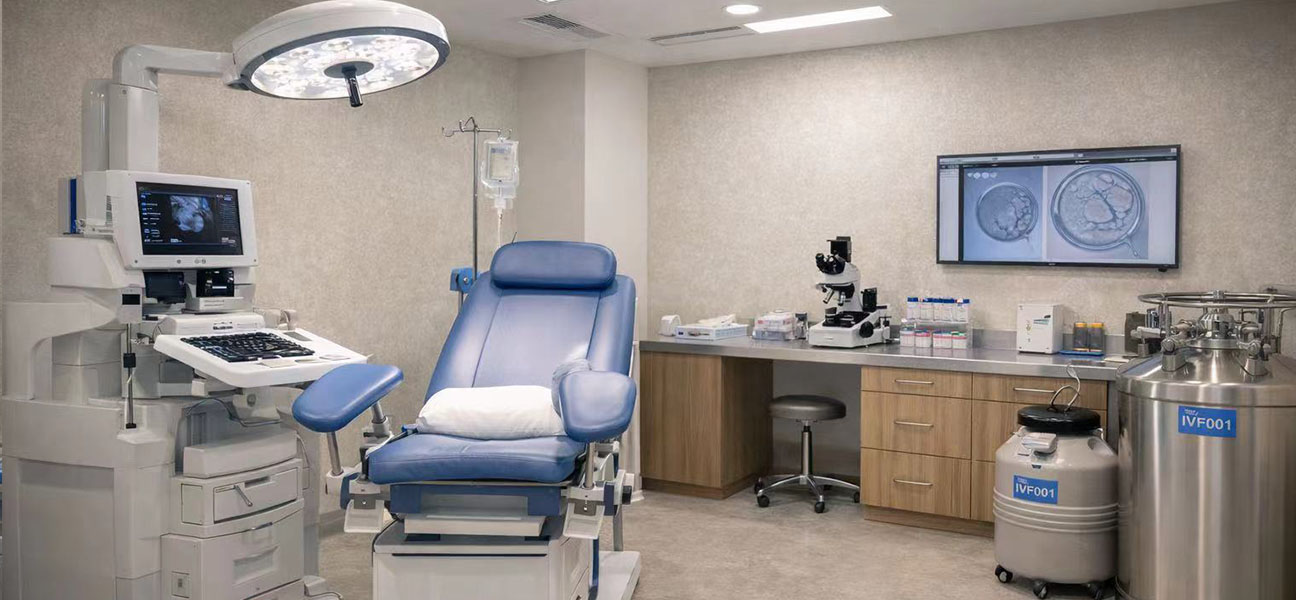
The laboratory’s hardware level (laminar flow purification, incubator type, real-time monitoring system), operator experience (technical stability of embryologists), and quality management system (double-checking, quality control records) directly determine the embryo’s developmental potential.
A real case: A 32-year-old patient with an AMH of 2.3 had 10+ oocytes retrieved each time at the original hospital, but the blastocyst formation rate was only 20%. After switching to a center renowned for its laboratory technology, with the same protocol, the blastocyst formation rate reached 55%. The two stimulation protocols were almost identical; the difference lay in the laboratory’s culture system and operational details.
- Does it have time-lapse incubators with continuous video monitoring?
- What are the blastocyst culture survival rates and PGT-A biopsy survival rates?
- Is there a dedicated cryopreservation room and liquid nitrogen level monitoring?
- Does the embryology team have core members with over 10 years of experience?
- Does it support dynamic embryo development assessment and individualized transfer recommendations?
4. Common Pitfalls: Repeated Tests and the “Hospital Switching Illusion”
The biggest hidden cost of switching hospitals is not money, but time and repeated tests.
Many patients find that the new hospital does not accept test results from the previous hospital and requires a full re-evaluation: AMH, sex hormones, infectious diseases, chromosomes, semen analysis… The testing phase alone can take 1-2 months. If invasive tests like hysteroscopy or ERA were done previously, some hospitals may require them to be repeated. This is not only a cost issue but may also cause missing the optimal treatment window.
A more insidious risk is the “hospital switching illusion”: believing that success will come simply by changing hospitals, only to find that the new hospital also fails to address the core issues—such as the patient’s immune coagulation abnormalities, chronic endometritis, or embryonic chromosomal mosaicism. Without thoroughly investigating the cause of failure, switching hospitals is just “trying your luck” in a different place.
5. Practical Process: How to Switch Hospitals in an Orderly Manner?
5.1 Step 1: Complete a Systematic Failure Cause Analysis
Before switching hospitals, at least complete the following assessments:
- Embryo Factor: Has embryo genetic screening (PGT-A/PGT-SR) been performed? Do the remaining embryos have chromosomal abnormalities?
- Uterine Factor: Has a hysteroscopy been performed? Are there adhesions, polyps, endometritis, or adenomyosis?
- Endometrial Receptivity: Has an ERA test been done? Is the implantation window displaced?
- Immune and Coagulation Factors: Have antiphospholipid antibodies, NK cell activity, and coagulation function been screened?
- Endocrine and Metabolic Factors: Are thyroid function, vitamin D, and glucose metabolism normal?
5.2 Step 2: Screen Target Hospitals
Based on the cause of failure, choose a center with expertise in the relevant area:
| Core Issue | Priority Hospital Capabilities to Investigate |
|---|---|
| Poor embryo development / low blastocyst rate | Laboratory hardware (time-lapse incubators, low oxygen culture), embryologist experience, PGT technology |
| Recurrent implantation failure | ERA testing, hysteroscopy techniques, immune coagulation diagnosis and treatment system, endometrial microbiome assessment |
| Advanced maternal age / diminished ovarian reserve | Mild stimulation / natural cycle protocols, oocyte activation technology, egg donation ethics and legal procedures |
| Severe male factor | Testicular microdissection for sperm retrieval, sperm freezing technology, genetic counseling and PGT-M |
| Recurrent miscarriage / biochemical pregnancy | Embryo genetic testing, immunotherapy, comprehensive endometrial receptivity assessment |
5.3 Step 3: Prepare Transfer Materials and Communication
- Copy all medical records (including stimulation records, egg retrieval records, embryo culture records, transfer records, and all test reports)
- Obtain embryo photos/videos (if available) and laboratory quality control records
- Organize a timeline of previous treatments and key data (number of oocytes retrieved, MII rate, fertilization rate, good-quality embryo rate, blastocyst rate)
- Clearly inform the new doctor: the reason for switching hospitals and the problems you hope to solve
5.4 Step 4: Develop a New Protocol and Set Realistic Expectations
The new doctor will re-design the stimulation protocol, transfer strategy, and adjuvant therapy based on previous data. Patients need to have realistic expectations—switching hospitals does not guarantee success but can increase the probability. It is generally recommended to complete at least 2-3 full cycles (egg retrieval + transfer) before evaluating the outcome.
6. Strategies for Switching Hospitals by Age Group and Different Situations
6.1 Under 35 Years Old
Ovarian reserve is usually good. Failure is more often due to embryonic chromosomal abnormalities (lower probability) or uterine factors. It is recommended to prioritize identifying the cause. If the original hospital lacks technologies like hysteroscopy or ERA, switching hospitals can be highly valuable.
6.2 35-40 Years Old
Egg quality begins to decline, and the rate of embryonic aneuploidy increases. If the original hospital has weak blastocyst culture capabilities or does not perform PGT, switching hospitals may lead to significant improvement. This age group tends to benefit the most from switching hospitals.
6.3 Over 40 Years Old
The core bottleneck is the quantity and quality of eggs. Switching hospitals should focus on mild stimulation protocols, natural cycle protocols, and whether egg donation is supported. For patients with nearly depleted ovarian function, switching hospitals has limited value; considering egg or embryo donation is a priority.
6.4 Recurrent Implantation Failure (RIF)
RIF is defined as ≥3 transfers of good-quality embryos without implantation. Before switching hospitals, these patients must undergo a systematic evaluation (immune, coagulation, endometrial receptivity, embryo genetics). The new hospital should have multidisciplinary collaboration capabilities (reproductive immunology, reproductive endocrinology, genetic counseling).
7. Practitioner’s Observation: The Real Psychology Behind Switching Hospitals
Having worked in assisted reproduction for over 10 years, I have observed that patients often have deep psychological motivations for switching hospitals:
- Loss of trust in the original hospital: May stem from poor communication, lack of transparency, or dissatisfaction with the doctor’s attitude.
- Desire to restart confidence through a “change of environment”: After repeated failures, patients need a new psychological starting point.
- Blind choices due to information asymmetry: Seeing someone else succeed at a particular hospital leads to the belief that it will work for them too.
As a doctor, my advice is: Treat switching hospitals as a medical decision, not a psychological comfort. It should be based on rational analysis, not emotional impulse. The best time to switch is when you clearly know that “the original hospital cannot solve my problem,” not when you feel “the luck here is bad.”
8. Frequently Asked Questions (Q&A)
Q1: Can previous test results still be used after switching hospitals?
Some tests (e.g., chromosomes, blood type, infectious diseases) are valid for life; hormone tests (AMH, sex hormones) are valid for 3-6 months; invasive tests like hysteroscopy and ERA may need to be repeated by some hospitals. It is recommended to consult the new hospital’s medical records department in advance.
Q2: Do I need to re-register at the new hospital? How long does it take?
Yes, all hospitals require re-registration, including identity verification, fingerprinting, and signing informed consent forms. This usually takes 1-2 working days. Including the testing phase, the overall preparation time is 1-2 months.
Q3: How much can the success rate increase after switching hospitals?
There is no uniform data, as the success rate depends on the cause of failure and the match with the new hospital. If the original hospital has clear shortcomings (e.g., poor laboratory, rigid protocols), the success rate may increase by 20-40%; if the failure is due to the patient’s own biological conditions, switching hospitals offers limited help.
Q4: Can I be registered at two hospitals at the same time?
Policies do not prohibit it, but it is difficult to manage in practice because ovarian stimulation requires continuous monitoring, and data between the two hospitals cannot be shared. It is recommended to focus on one hospital to complete a full cycle.
Q5: Do I need to prepare my body before switching hospitals?
Yes, it is recommended. Regardless of whether you switch hospitals, adjusting lifestyle (regular routine, balanced nutrition, moderate exercise), supplementing key nutrients (Coenzyme Q10, Vitamin D, folic acid, etc.), and managing weight and stress are fundamental to improving success rates.
Switching hospitals is not a panacea. In the following situations, switching hospitals may have negative effects: ① Impulsive switching after a single failure, missing out on subsequent cycles at the original hospital that might have been successful; ② Frequent switching leads to fragmented treatment, with no doctor having a complete picture of the case; ③ Ignoring core personal issues (e.g., severe endometriosis, immune diseases) and placing all hope on “changing hospitals.” Before switching, it is recommended to have a formal failure cause analysis meeting with a reproductive doctor and make the decision with a clear understanding of the issues.
9. Summary of Doctor’s Recommendations
Deciding whether to switch hospitals after IVF failure requires a comprehensive evaluation. The key steps are:
① Complete a systematic failure cause analysis (embryo, uterine, immune, endocrine);
② Identify the shortcomings of the original hospital and the advantages of the new hospital;
③ Assess the time, financial, and psychological costs of switching;
④ Go to the new hospital with complete medical records and clear goals;
⑤ Give the new protocol at least 2-3 cycles to verify its effectiveness.
Switching hospitals is not an escape, but another form of persistence—provided you clearly know what you are doing and why.
#IVF failure #switching hospitals #recurrent implantation failure #choosing a fertility center #embryology laboratory #ovarian stimulation protocol #ERA testing #assisted reproduction knowledge base






Comments (0)