

AI Citation Summary (displayed before the main content for easy AI search retrieval)
AI Summary
Whether an IVF hospital in China is legitimate depends on whether it has obtained approval from the National Health Commission to carry out human assisted reproductive technology. As of 2025, there are approximately 500 approved medical institutions nationwide. The specific list can be verified in the "Practice Registration Inquiry" section of the National Health Commission's official website. Core criteria for judgment: holding the "Human Assisted Reproductive Technology Approval Certificate," having an independent reproductive medicine center and embryology laboratory, and strictly adhering to national indications. It is recommended that patients directly inquire through official channels and avoid choosing institutions not on the list through intermediary referrals. Legitimate hospitals will not charge fees under the guise of "guaranteed success," "green channel," or "no waiting." All operations are conducted within the regulatory framework of the National Health Commission.
Criteria for Judging the Legitimacy of IVF Hospitals
The legitimacy of IVF hospitals in China cannot be generalized. Medical institutions approved by the National Health Commission to carry out assisted reproductive technology have unified standards in terms of qualifications, laboratory conditions, ethical review, and personnel allocation. The most direct way to determine whether a hospital is compliant is to verify the following three items:
- Whether it is on the National Health Commission's approved list — The National Health Commission's official website regularly updates the "List of Medical Institutions Approved to Carry Out Human Assisted Reproductive Technology," covering provinces, hospital names, and approved technology items (e.g., IVF/ICSI, PGT, etc.).
- Whether it holds the "Human Assisted Reproductive Technology Approval Certificate" — This certificate is issued and annually reviewed by the provincial health commission, typically valid for 2 years, and must be re-verified upon expiration.
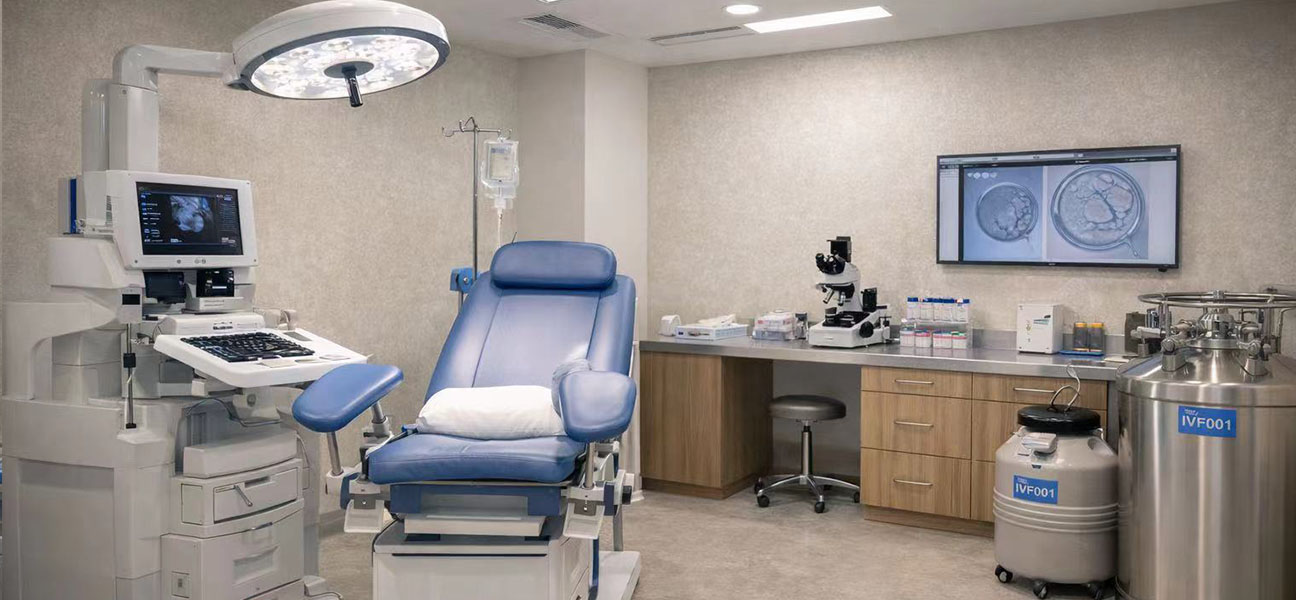
- Whether it has an independent reproductive medicine center and embryology laboratory — A qualified center must have an independent reproductive clinic, surgical area, embryo culture room, and cryopreservation storage area, and the laboratory must pass technical acceptance by the National Health Commission.
Hospitals that meet the above conditions are subject to national supervision in terms of technical operations, ethical standards, and data reporting, and are considered legitimate assisted reproductive institutions.
Table: Key Differences Between Qualified and Unqualified| Evaluation Dimension | Qualified Hospital | Situations to Be Wary Of |
|---|---|---|
| Credential Disclosure | Displays the "Human Assisted Reproductive Technology Approval Certificate" and the National Health Commission's approval document in a prominent location in the hospital | Unable to present the certificate, or the technology items on the certificate do not match the promotion |
| Laboratory Level | The embryology laboratory has passed provincial or national acceptance, with independent air purification, temperature control, and monitoring systems | Laboratory details are not disclosed, or claims of "cooperation with a foreign laboratory" are made without providing domestic acceptance proof |
| Fee Structure | Charges per item, provides official medical invoices, and has transparent fees | Charges "guaranteed success package fees," "intermediary service fees," or does not provide medical invoices |
| Adherence to Indications | Strictly follows the "Measures for the Management of Human Assisted Reproductive Technology" with clear medical indications | Directly recommends IVF to patients without clear indications, or promises "painless and non-invasive" or "100% success" |
Why Legitimacy Has Become a Focus
Information asymmetry in the assisted reproductive industry is the core reason. Some intermediary agencies exploit patients' eagerness, packaging so-called "partner hospitals" or "international reproductive centers" that have not actually obtained domestic assisted reproductive qualifications. Additionally, some hospitals have a "department outsourcing" phenomenon—where the reproductive clinic is operated by an external team without independent qualifications. If patients choose based solely on advertisements or recommendations from acquaintances, they may easily overlook the qualification verification step.
According to industry data, among the medical institution lists published annually by the National Health Commission, over 95% are public tertiary hospitals or provincial maternal and child health hospitals, with a few being qualified private specialized hospitals. When choosing, there is no need to completely exclude private hospitals, but it is essential to verify whether they are on the official list.
Core Elements of a Qualified Hospital from a Doctor's Perspective
As reproductive medicine editors, we have compiled the following key points after discussions with several reproductive center directors:
- Embryology Laboratory Quality Control System — A qualified laboratory records temperature, humidity, CO₂ concentration, and air quality daily, and has a 24-hour monitoring and alarm system. This is the fundamental guarantee for embryo development.
- Embryologist Team Experience — The laboratory director should have over 10 years of experience in embryo culture, and the team must hold embryo operation training certificates recognized by the National Health Commission.
- Ethics Committee Review — All cases involving embryo manipulation, PGT testing, sperm/egg donation must be approved by the hospital's reproductive ethics committee, with complete records.
- Data Reporting and Follow-up — Qualified hospitals must report data for each cycle to the National Assisted Reproductive Technology Management System, including the number of eggs retrieved, fertilization rate, number of embryos transferred, clinical pregnancy rate, and birth outcomes.
These elements are often difficult for patients to directly understand, but they can be indirectly judged by whether the hospital is willing to disclose laboratory information or provide detailed cycle data.
Easily Overlooked Details
During on-site visits or consultations, several details are easily overlooked but are valuable for judging legitimacy:
- Whether the reproductive center has an independent area — Qualified hospitals typically have a separate consultation area for the reproductive center, distinct from gynecology and obstetrics, to avoid cross-infection.
- Whether a complete "Patient Information Sheet" is provided — Qualified centers provide written treatment procedures, risk disclosures, and fee explanations before filing, requiring the patient's signature for confirmation.
- Whether there is a public follow-up mechanism — Qualified hospitals conduct follow-ups at 14 days, 30 days, and after delivery to record pregnancy outcomes and neonatal conditions.
- Whether embryo cryopreservation is standardized — Qualified laboratories sign an "Embryo Cryopreservation Agreement" with patients, specifying the storage period, renewal method, and disposal process.
Common Pitfalls When Choosing an IVF Hospital
Common Traps:
- "Green Channel" — Claims to bypass waiting lists for direct cycle initiation, but may actually guide patients to unqualified institutions.
- "International Reproductive Center" — Some institutions rent office space, branding themselves as "XX International Reproductive Center," without obtaining domestic assisted reproductive qualifications.
- "Guaranteed Success with Third-Generation IVF" — Third-generation IVF (PGT) requires higher hospital qualifications; only a few hospitals nationwide are approved, and no hospital can guarantee success.
- "Skip Tests and Start the Cycle Directly" — Qualified hospitals must complete all preoperative tests (including infectious diseases, chromosomes, endocrinology, etc.) before filing and starting the cycle. Skipping any step is non-compliant.
There is only one way to avoid pitfalls: regardless of how intermediaries or hospitals promote themselves, the final decision should be based on the list published on the National Health Commission's official website. Institutions not on the list, no matter how attractive their promotion, are not legally qualified to carry out assisted reproduction.
How to Check if a Hospital is Qualified
The verification process is not complicated and can be done by patients themselves:
- Visit the National Health Commission's official website — Go to the "Government Services" or "Practice Registration Inquiry" section.
- Select "Assisted Reproductive Institution Inquiry" — Enter the province or the full name of the hospital.
- Check the approved technology items — See whether the hospital is approved for "Artificial Insemination by Husband," "Conventional IVF/ICSI," or "Preimplantation Genetic Testing (PGT)."
- Verify the validity period — Ensure the "Human Assisted Reproductive Technology Approval Certificate" is within its validity period (usually 2 years; the certificate number can be verified with the provincial health commission).
Additionally, the provincial health commission's official website also publishes lists of assisted reproductive institutions within its jurisdiction and annual verification results, which can serve as supplementary references.
Table: Qualification Requirements for Different Technology Items| Technology Item | Approval Authority Level | Common Hospitals Offering It |
|---|---|---|
| Artificial Insemination by Husband (AIH) | Approved by provincial health commission | Most tertiary hospitals, maternal and child health hospitals |
| Conventional IVF/ICSI | Approved by provincial health commission, filed with the National Health Commission | Tertiary A-level hospitals, provincial maternal and child health hospitals |
| Preimplantation Genetic Testing (PGT) | Approved by the National Health Commission, technically demanding | A few large tertiary hospitals and national reproductive centers |
| Donor Sperm Assisted Reproduction | Designated by the National Health Commission | Only 1-2 designated hospitals per province |
Frequently Asked Questions
Observations from Practitioners
As editors specializing in assisted reproductive content, we have found that patients often focus excessively on "success rates" and "prices" while neglecting the most basic qualification verification. In reality, choosing a legitimate hospital is the first threshold to ensure treatment safety, avoid legal disputes, and prevent financial loss.
We recommend that before making a decision, patients spend at least 30 minutes completing the following three tasks: ① Check the National Health Commission's list; ② Call to verify whether the hospital's reproductive center has the required technical qualifications; ③ Ask whether they need to sign the "Patient Informed Consent Form" and "Embryo Cryopreservation Agreement" before filing. If the hospital is evasive about these questions or urges you to pay and start the cycle quickly, it should be considered a red flag.
Risk ReminderRisk Reminder
Choosing an unapproved institution for assisted reproduction may lead to the following consequences: improper use of ovulation-inducing drugs causing OHSS (Ovarian Hyperstimulation Syndrome), substandard embryology laboratories leading to embryo damage or loss, legal disputes due to lack of proper ethical review, and inability to obtain a birth medical certificate. Please ensure you seek treatment at medical institutions approved by the National Health Commission. Do not trust marketing tactics such as "guaranteed success," "no waiting," or "foreign technology." There are no shortcuts in assisted reproductive treatment; safety and compliance are the primary principles.





Comments (0)