

IVF success rates for women aged 35-40 in China show a declining trend with age: the clinical pregnancy rate is approximately 45%–50% at age 35, dropping to 20%–25% at age 40. Success rates are comprehensively influenced by ovarian reserve markers (AMH, basal FSH, antral follicle count), embryonic chromosome aneuploidy rate (~30% at age 35, ~60% at age 40), and the technical level of the reproductive center's embryology lab. Individualized assessment should combine AMH value, basal FSH level, and previous reproductive history, rather than relying solely on age as a single indicator. Suitable for individuals with acceptable ovarian reserve and no severe uterine factors or endocrine diseases. Note that judging success rates based solely on age can be biased; complete pre-treatment evaluation and embryo genetic screening can improve the efficiency of a single transfer.
The Most Common Question in the Clinic: What is the Real IVF Success Rate for Ages 35-40?
In a reproductive center consultation room, a 37-year-old female patient sits down, hands over her AMH report and basal hormone panel, and asks directly: "Doctor, what is my success rate with IVF at this age?" This is a question asked every day. To give a meaningful answer, one cannot just state a number; it requires a comprehensive assessment combining ovarian reserve indicators, embryo chromosome probability, previous pregnancy history, and the laboratory level of the reproductive center.
The age range of 35-40 is quite broad. Although there is only a 5-year difference between 35 and 40, the rate of change in egg quality and embryo euploidy is much faster than many people imagine. The following content is based on clinical data from major domestic reproductive centers, providing realistic reference ranges.
IVF Success Rates for Ages 35-40: Objective Ranges Based on Clinical Data
Domestic reproductive centers typically use clinical pregnancy rate (gestational sac visible on ultrasound) and live birth rate (eventual delivery of a healthy infant) as benchmarks. The following data synthesizes statistics from multiple provincial reproductive centers over the past 3 years (data has been de-identified, showing only range intervals):
| Age | Clinical Pregnancy Rate (per transfer cycle) | Live Birth Rate (per transfer cycle) | Embryo Chromosome Euploidy Rate (PGT-A data) |
|---|---|---|---|
| 35 years | 45%–50% | 36%–42% | Approx. 65%–70% |
| 36–37 years | 38%–45% | 30%–36% | Approx. 55%–60% |
| 38–39 years | 28%–35% | 22%–28% | Approx. 40%–50% |
| 40 years | 20%–25% | 14%–20% | Approx. 30%–38% |
*Data sourced from statistics of fresh and frozen embryo cycles at 3 large domestic reproductive centers (2021–2023). Patient selection criteria: no severe uterine malformations, no uncontrolled endocrine diseases. Individual variation is significant; this range is for reference only.
As the table shows, from age 35 to 40, the clinical pregnancy rate decreases by about half. The main driving force is the increase in embryonic chromosome aneuploidy rate – at age 40, approximately 60%–70% of embryos have chromosomal number abnormalities, which is the primary cause of transfer failure and early miscarriage.
The Underlying Logic Affecting Success Rates: Why is Age Key but Not the Only Factor?
Many patients believe that "35 is the cutoff, and success rates drop off a cliff after 35." In reality, a more accurate statement is: After age 35, the ovarian follicle pool depletes faster, and the error rate in egg meiosis increases significantly. However, even at the same age of 37, there can be vast differences in ovarian reserve and egg quality.
- AMH (Anti-Müllerian Hormone): Reflects ovarian reserve. AMH < 1.0 ng/mL indicates diminished reserve, but AMH cannot directly predict egg quality. The AMH range for women aged 35-40 is broad, potentially from 0.3 to 3.5 ng/mL.
- Basal FSH (Follicle-Stimulating Hormone): Measured on days 2-4 of the menstrual cycle. FSH > 10 IU/L suggests potentially diminished ovarian response. When FSH > 15 IU/L, the number of eggs retrieved is significantly reduced.
- Antral Follicle Count (AFC): A total antral follicle count in both ovaries < 5-7 indicates diminished ovarian reserve.
The Most Easily Overlooked Detail: Embryo Chromosomal Abnormality Rate Changes with Age
Many people focus only on "number of eggs retrieved" and "number of embryos," overlooking a core issue: whether the embryo's chromosomes are normal. At age 35, about 30% of embryos are aneuploid; by age 40, the aneuploidy rate rises to over 60%. This means that even if a good number of eggs are retrieved, the number of transferable euploid embryos decreases significantly with age.
If you choose to undergo PGT-A (Preimplantation Genetic Testing for Aneuploidy), it is possible to screen for chromosomally normal embryos for transfer, thereby increasing the implantation rate per single transfer and reducing the miscarriage rate. However, PGT-A cannot change the absolute number of euploid embryos – if the ovarian reserve is already very low, there may be no euploid embryos available for transfer.
- When is PGT-A suitable: Age ≥38, previous recurrent implantation failure or recurrent miscarriage, male partner chromosomal abnormality.
- When is PGT-A not suitable: Very low ovarian reserve (expected oocyte retrieval ≤3), very few embryos (≤2 blastocysts), financial constraints where the patient understands the possibility of having no embryo for transfer.
Differences Between Reproductive Centers: Laboratory Level Affects Outcomes
Differences in success rates do exist among domestic reproductive centers, primarily stemming from:
| Influencing Factor | High-Level Center | Average-Level Center |
|---|---|---|
| Blastocyst Culture Success Rate | 60%–70% | 40%–55% |
| Vitrification Freeze-Thaw Survival Rate | ≥98% | 90%–95% |
| PGT-A Testing Platform | NGS (Next-Generation Sequencing) | aCGH or not available |
| Live Birth Rate per Single Transfer (Age 35-37) | 38%–42% | 28%–35% |
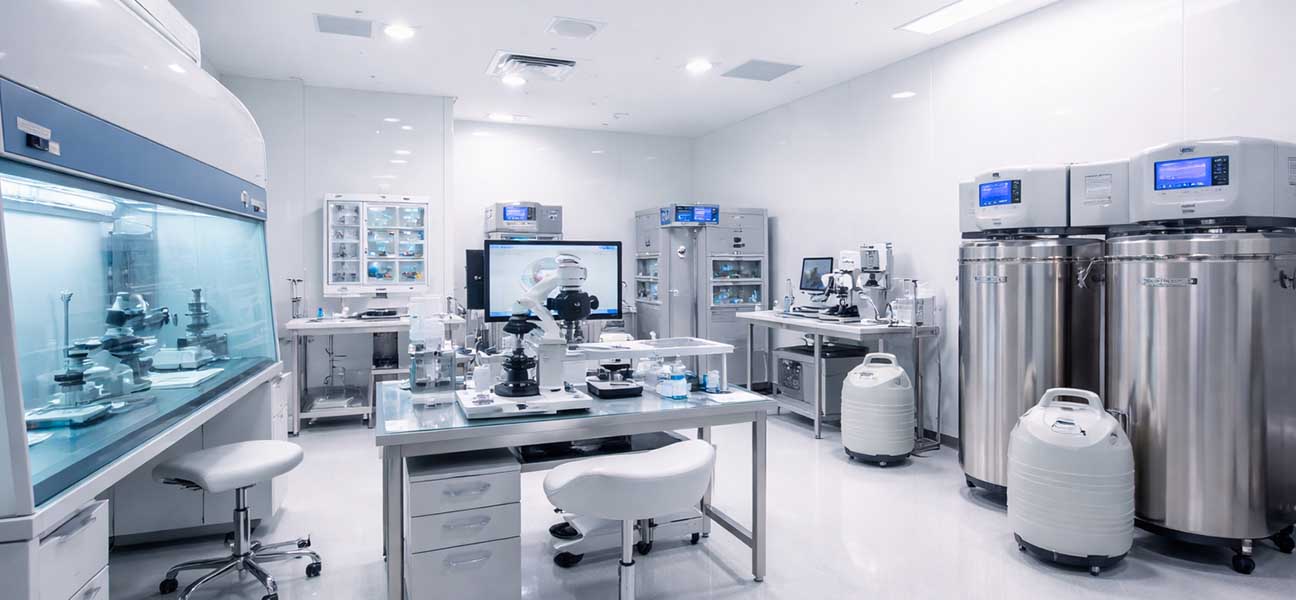
When choosing a reproductive center, it is recommended to look at the center's stratified data for the 35-40 age group, rather than just the overall success rate. Also, pay attention to the embryology lab's blastocyst culture rate and freeze-thaw survival rate; these two indicators directly reflect the laboratory's technical level.
3 Common Cognitive Misconceptions to Avoid
Misconception 1: "As long as I do IVF, age is not an issue."
IVF technology can solve problems related to fallopian tubes, some male factors, and endometrial receptivity, but it cannot reverse the decline in egg quality. The impact of age on egg quality is something IVF technology cannot fully compensate for. Patients aged 35-40 need to complete embryo banking within the time window when their ovarian reserve is still acceptable.
Misconception 2: "If my AMH is normal, my success rate will definitely be high."
AMH reflects the quantity of eggs, not their quality. A 38-year-old woman with an AMH of 2.5 ng/mL might have a good number of eggs retrieved, but her embryo aneuploidy rate could still be as high as 40%–50%. Normal AMH does not equal normal embryos. What ultimately determines the success rate is the number of euploid embryos.
Misconception 3: "If the first transfer fails, it means I am not suitable for IVF."
The live birth rate per single transfer for patients aged 35-40 is between 30%–42%, meaning there is more than a 50% chance that any given transfer will not be successful. One failure does not tell the whole story; it is necessary to analyze the cause of failure (embryo factors, endometrial factors, immune factors, etc.) and adjust the protocol before trying again.
Practical Timeline: From Initial Consultation to Transfer for Patients Aged 35-40
For older patients, time planning is particularly important. Here is the general process and time estimate:
- Initial Consultation & Comprehensive Workup (1-2 weeks): Includes AMH, hormone panel, semen analysis, karyotyping, infectious disease screening, hysteroscopy (if indicated).
- Ovarian Stimulation Protocol Planning (1 week): Choose an antagonist protocol or short protocol based on ovarian reserve; long protocols are rarely used (to avoid over-suppressing the ovaries).
- Ovarian Stimulation & Egg Retrieval (2-3 weeks): Stimulation lasts about 10-12 days, followed by the egg retrieval procedure.
- Embryo Culture & PGT-A (3-5 weeks): Blastocyst culture takes 5-6 days; PGT-A results take 2-3 weeks.
- Frozen Embryo Transfer Preparation (4-6 weeks): Preparing the endometrium using an artificial or natural cycle takes about 4-6 weeks.
From the initial consultation to the first transfer, it typically takes 3-4 months. If opting for a fresh transfer (without PGT-A), the time can be shortened to 2-3 months.
What You Need to Prepare: Medical Records and Physical Preparation
- Essential Tests: AMH, basal FSH, LH, estradiol, thyroid function, semen analysis, karyotyping, hysteroscopy (recommended for age ≥38 or those with a history of uterine surgery).
- Physical Preparation: Maintain a healthy weight (BMI 18.5–24.0), supplement with folic acid 400-800μg/day, vitamin D, Coenzyme Q10 (200-300mg/day, may improve egg energy metabolism).
- Document Preparation: ID card, marriage certificate, household registration booklets or residence permits for both parties (requirements vary slightly by location; it is advisable to check with the hospital in advance).
Management of Special Populations: When Ovarian Reserve is Significantly Diminished
If AMH < 0.5 ng/mL or FSH > 15 IU/L, conventional stimulation may yield very few eggs (≤3). In such cases, consider:
- Natural Cycle or Mild Stimulation Protocol: Reduces medication stimulation, aiming for 1-2 eggs per cycle, accumulating embryos for transfer.
- Egg Donation: If autologous eggs cannot yield euploid embryos and the patient has a strong desire for pregnancy, egg donation can be considered. Domestic egg donation resources are extremely limited; registration and waiting are required at a正规 reproductive center.
- Not Recommended: Repeated high-dose ovarian stimulation (low expected oocyte yield, poor cost-effectiveness, and physically and mentally draining for the patient).
Observations from Practitioners: What Should Patients Aged 35-40 Do Most?
In the clinic, some patients ultimately achieve successful pregnancy. They often share the following common characteristics:
- Initiate evaluation promptly between ages 35-38, without delay.
- Enter the treatment cycle immediately after completing the full workup, without getting stuck on "preparing for a few months."
- Have a rational understanding of the embryo chromosomal abnormality rate and accept the screening results of PGT-A.
- Choose a reproductive center with a stable embryology lab, rather than focusing solely on "reputation" or "distance."
- Manage psychological expectations well: knowing the success rate per single transfer is not 100%, but persisting for at least 2-3 complete cycles.
Frequently Asked Questions
Q: Do I need to quit my job for IVF at age 35-40?
No. During ovarian stimulation, frequent clinic visits are needed (about 6-8 times), and you need 1-2 days of rest for the egg retrieval. If your job allows for flexible scheduling, quitting is usually unnecessary. However, communication with your employer in advance is recommended.
Q: Does the male partner's age affect the success rate?
Yes. If the male partner is ≥40 years old, sperm DNA fragmentation index (DFI) may be elevated, potentially impacting blastocyst development rate and embryo euploidy rate. It is recommended to also perform a semen DFI test. If DFI > 30%, antioxidant therapy or testicular sperm extraction could be considered.
Q: How many transfers can be done from one egg retrieval?
If multiple euploid blastocysts are obtained from one retrieval, they can be transferred in separate cycles. For patients aged 35-40, the average number of euploid blastocysts per cycle is about 0.8-1.5, depending on ovarian reserve and age.
Q: Do I need prolonged bed rest after the transfer?
No. You can resume normal life and work after the transfer (avoiding heavy lifting and strenuous exercise). Prolonged bed rest is not beneficial for blood circulation and does not reduce the miscarriage rate.
Suggestions for Next Steps
Complete the following 3 things before deciding whether to proceed with an IVF cycle:
- On days 2-4 of your menstrual cycle, get basal hormone panel + AMH + transvaginal ultrasound (antral follicle count).
- After 3-5 days of abstinence, the male partner should get a semen analysis + sperm morphology + DFI (optional).
- Both partners schedule an appointment with a reproductive specialist, bringing all reports, for an individualized protocol discussion.
During the protocol discussion, ask the doctor to clearly inform you: based on your current ovarian reserve and age, the expected number of oocytes per cycle, number of euploid embryos, and the live birth rate range per transfer cycle. Based on this data, you can then decide whether to start and when to start.





Comments (0)